
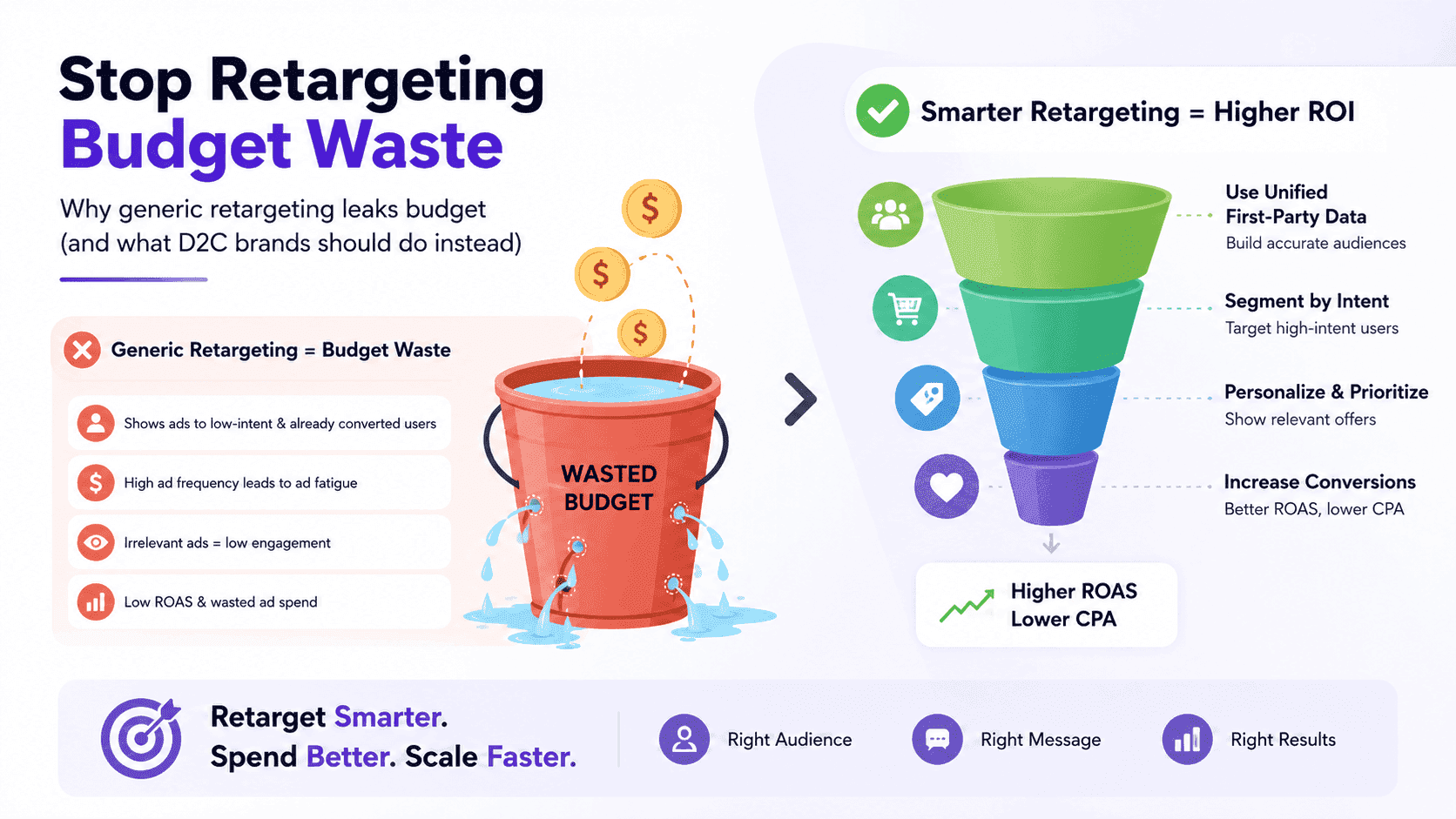
Strategies to optimize retargeting spend and avoid paying twice for the same customers in D2C brands
Ranjeet Ranjan
AI Executive Brief
This article outlines key strategies to prevent retargeting budget waste in D2C brands by using suppression audiences, predictive intent marketing, and customer journey optimization. It highlights common causes of inefficiencies and the risks of overspending and diminished ROI.
D2C marketers often lose valuable ad spend by retargeting customers who have already purchased, resulting in wasted budget, reduced ROI, and missed opportunities to engage high-potential prospects. Without effective audience segmentation and campaign alignment, brands risk paying twice for the same customer while diluting campaign performance.
How to Stop Retargeting Budget Waste in D2C Brands: Strategies to Avoid Paying Twice for Customers
D2C marketers often lose valuable ad spend by retargeting customers who have already purchased, resulting in wasted budget, reduced ROI, and missed opportunities to engage high-potential prospects. Without effective audience segmentation and campaign alignment, brands risk paying twice for the same customer while diluting campaign performance. This article offers actionable strategies to curb retargeting budget waste, including the use of suppression audiences, predictive intent marketing, and customer journey optimization to improve the efficiency and relevance of retargeting campaigns.
The Real Cost of Retargeting Budget Waste for D2C Brands
Common Causes of Budget Waste in Retargeting Campaigns
Retargeting budget waste stems from several frequent issues. Marketers often retarget users who recently converted, inadvertently paying multiple times to reach the same customers. Broad or poorly segmented retargeting pools include low-intent or disengaged users, which dilutes ad relevance. Additionally, uncoordinated retargeting campaigns create overlapping touches that can lead to ad fatigue. These factors collectively inflate costs and reduce overall retargeting campaign effectiveness.
Business Risks: Overspending, Reduced ROI, and Customer Overexposure
Redundant retargeting increases marketing expenses and tightens budget availability for other growth initiatives like acquisition and retention. Repeatedly targeting converted customers can erode brand perception through customer overexposure, while diminishing ROI undermines campaign sustainability and makes scaling difficult. Inefficient spend can also obscure true audience insights, hindering optimization and innovation efforts.
Audience Suppression: Preventing Redundant Ad Spend on Converted Customers
What Are Suppression Audiences and Why They Matter
Suppression audiences exclude specific groups—usually customers who have completed a purchase—from retargeting campaigns. By preventing ads from showing to these users, suppression audiences help focus marketing budgets on prospects or customers who can still provide incremental value. This approach is particularly valuable for D2C brands with high acquisition costs and a need to maximize customer lifetime value.
Best Practices for Building and Timing Suppression Audiences
Effective suppression requires defining clear criteria to identify converted customers through purchase events, CRM systems, or conversion pixels. Dynamic updating is essential—suppression lists should refresh regularly to capture new buyers without excluding users prematurely. Segmenting suppression audiences by recency, product category, or lifecycle stage helps improve precision and ensures budget is allocated to the most relevant users.
Integrating Identity Resolution to Improve Suppression Accuracy
Identity resolution technology consolidates fragmented customer data from multiple devices and touchpoints into unified profiles. This capability enhances suppression audience accuracy by ensuring converted customers are identified correctly despite varying identifiers. It reduces errors in exclusion, avoids retargeting the same individual multiple times across channels, and supports data freshness and privacy compliance. Learn more about identity resolution.
Using Predictive Intent Marketing to Prioritize High-Value Retargeting Segments
How Predictive Behavioral Analytics Inform Smarter Retargeting
Predictive intent marketing uses behavioral insights—like browsing patterns, engagement levels, and purchase history—to estimate a user’s likelihood to convert. This allows marketers to prioritize retargeting budgets toward audiences most likely to respond, rather than casting a wide net. By focusing spend on high-intent segments, campaigns become more effective and reduce budget wasted on low-priority users.
Practical Framework for Incorporating Predictive Intent Signals into Retargeting Workflows
- Collect and unify behavioral data from multiple sources such as website visits, email engagement, and ad interactions.
- Apply predictive models to score users based on recency, frequency, and behavioral signals aligned with purchase likelihood.
- Segment audiences into tiers by intent scores (high, medium, low) to focus retargeting efforts.
- Allocate retargeting budgets proportionally, directing more spend to high-intent audiences.
- Regularly monitor campaign results and recalibrate models using updated customer data.
Optimizing Customer Journey to Maximize Retargeting Efficiency and Reduce Waste
Aligning Retargeting Campaigns with Customer Journey Stages
Retargeting is more effective when tailored to a customer’s stage in the buying journey. Early-stage prospects benefit from awareness and educational messaging, while late-stage customers respond better to incentives or cross-sell offers. Aligning campaigns with journey stages increases ad relevance, reduces wasted impressions, and improves conversion potential. Discover how customer journey orchestration can assist this process.
Techniques to Avoid Overlapping Ads and Duplicate Impressions
Uncoordinated ad delivery can cause users to receive multiple, overlapping ads that lead to fatigue and wasted budget. Implement frequency caps and sequential messaging to space touchpoints effectively. Exclude audience segments already targeted in other campaigns and use journey orchestration tools to manage consistent, non-redundant ad exposures across channels.
Measuring and Tracking Retargeting Budget Efficiency
Track suppression audience coverage and update frequency to prevent needless spend on converted customers. Monitor conversion rates across intent-based segments and use multi-touch attribution models to evaluate retargeting influence accurately. Key performance metrics include cost per conversion, frequency, ad overlap, and audience saturation, which help identify waste and guide optimization. Further insights on attribution can be found in marketing attribution.
Common Mistakes to Avoid in Retargeting Budget Management
- Failing to update suppression audiences regularly, allowing repeat targeting of recent buyers.
- Neglecting identity resolution, leading to fragmented profiles and inaccurate exclusions.
- Ignoring predictive intent data and wasting budget on low-likelihood segments.
- Overlooking customer journey alignment, causing overlapping campaigns and ad fatigue.
- Setting frequency caps too loosely, increasing impressions without conversion gain.
- Relying only on last-touch attribution, which can undervalue retargeting impact.
- Not tracking incremental lift or adjusting budgets based on audience quality.
How DriveMetaData Supports Smarter Retargeting Budget Allocation
Identity Resolution and Suppression Audience Capabilities
DriveMetaData helps unify customer identities from varied sources into consolidated profiles, enhancing suppression audience precision. This reduces redundant retargeting spend by accurately excluding converted customers across devices and channels, with regularly refreshed identity graphs that adapt to changes in buyer behavior. Learn about our identity resolution features.
Predictive Intent Signals in Attribution Models
Integrating predictive behavioral analytics into its attribution engine, DriveMetaData enables marketers to focus retargeting budgets on audiences with the greatest likelihood to convert, supporting more efficient spend allocation and helping reduce budget wasted on lower-intent segments. Explore our marketing attribution capabilities.
Customer Journey Orchestration to Reduce Overlaps and Waste
DriveMetaData’s customer journey builder facilitates creating stage-aware retargeting sequences and controlling ad cadence. This orchestration helps prevent overlapping campaigns, frequency issues, and redundant impressions by aligning retargeting efforts closely with actual buyer journeys. See more on customer journey orchestration.
Next Steps: How to Apply These Strategies and Measure Success
Begin by auditing your retargeting campaigns to assess suppression list use, identity resolution integration, and alignment with predictive intent marketing. Implement dynamic suppression audiences with frequent updates to avoid targeting recent purchasers unnecessarily. Build predictive intent models to score and segment audiences, allocating budgets accordingly. Map retargeting efforts to specific customer journey stages and employ frequency caps to minimize user fatigue. Measure success using metrics like reduced duplicate spend, cost per conversion improvements, and incremental lift analyses, and refine your approach based on these insights.
Call to Action: Optimize Your Retargeting Budget with DriveMetaData
Request a demo to see how DriveMetaData can help you reduce retargeting budget waste by leveraging suppression audiences, predictive intent, and journey orchestration.
How soon after purchase should customers be added to suppression audiences?
Customers should be added to suppression audiences immediately after purchase confirmation, with suppression lists updating dynamically to reflect new conversions. This ensures budgets aren’t wasted on recent buyers while avoiding premature exclusion of users eligible for cross-sell or loyalty campaigns after an appropriate period.
What data sources are typically used for building suppression audiences?
Common sources include CRM purchase records, e-commerce transaction data, conversion pixels, and unified profiles from identity resolution systems. Combining multiple sources improves suppression accuracy and coverage.
How can marketers measure if retargeting budgets are optimized?
Marketers can track reductions in duplicate impressions to converted customers, improved cost per conversion, incremental conversion lift attributable to retargeting, and effective segmentation by predictive intent scores. Regular review of these metrics supports ongoing budget optimization.
Begin by auditing your retargeting campaigns to assess suppression list use, identity resolution integration, and alignment with predictive intent marketing. Implement dynamic suppression audiences with frequent updates to avoid targeting recent purchasers unnecessarily. Build predictive intent models to score and segment audiences, allocating budgets accordingly. Map retargeting efforts to specific customer journey stages and employ frequency caps to minimize user fatigue. Measure success using metrics like reduced duplicate spend, cost per conversion improvements, and incremental lift analyses, and refine your approach based on these insights.
Attribution Audit
Find the gaps hiding in your attribution data.
Get a focused audit of campaign tracking, ROAS signals, and conversion paths before media spend leaks into blind spots.
Related Blogs
More from our insights
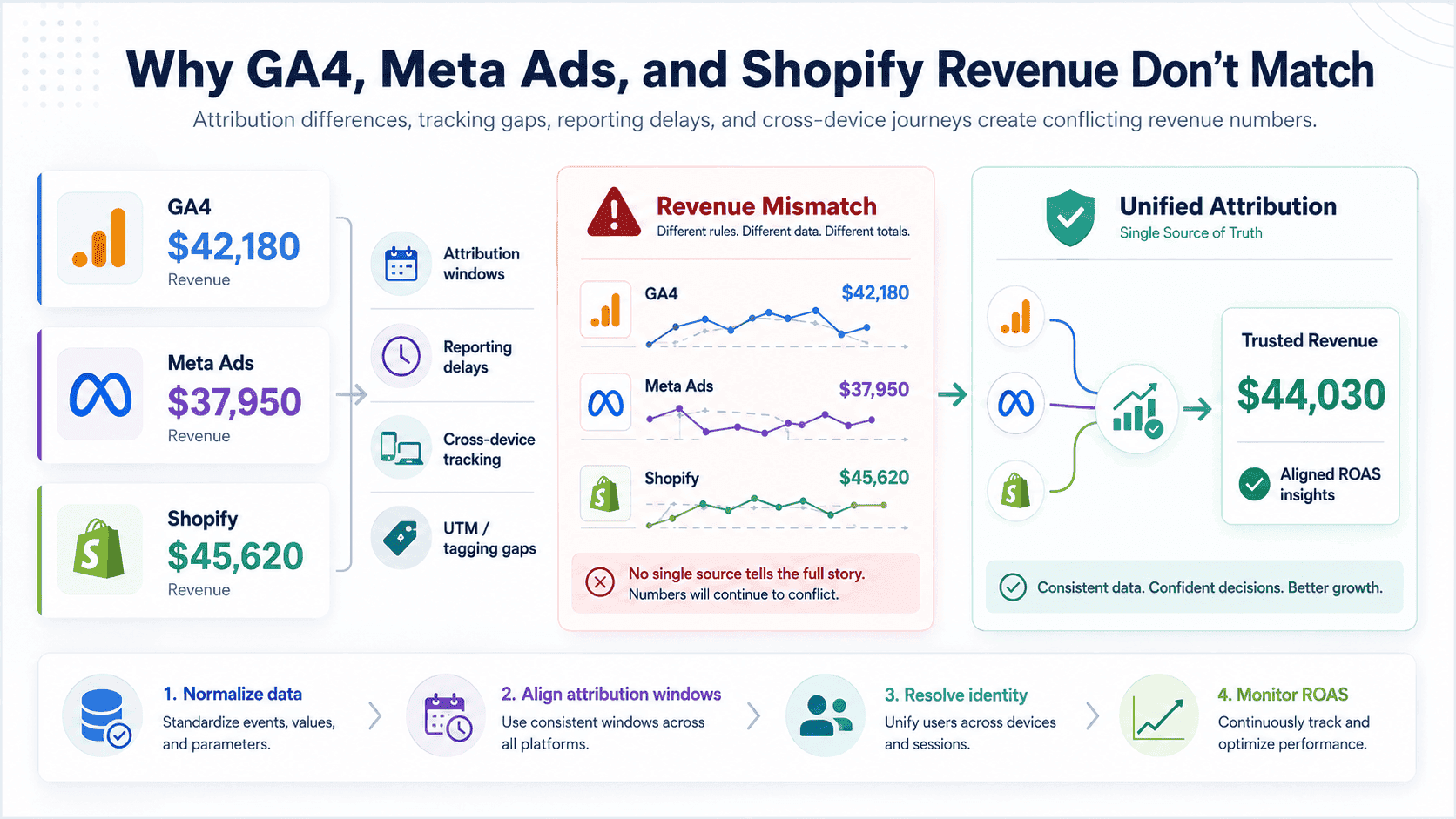
Why GA4, Meta Ads, and Shopify Revenue Do Not Match Need
Marketing Attribution · 3 min read
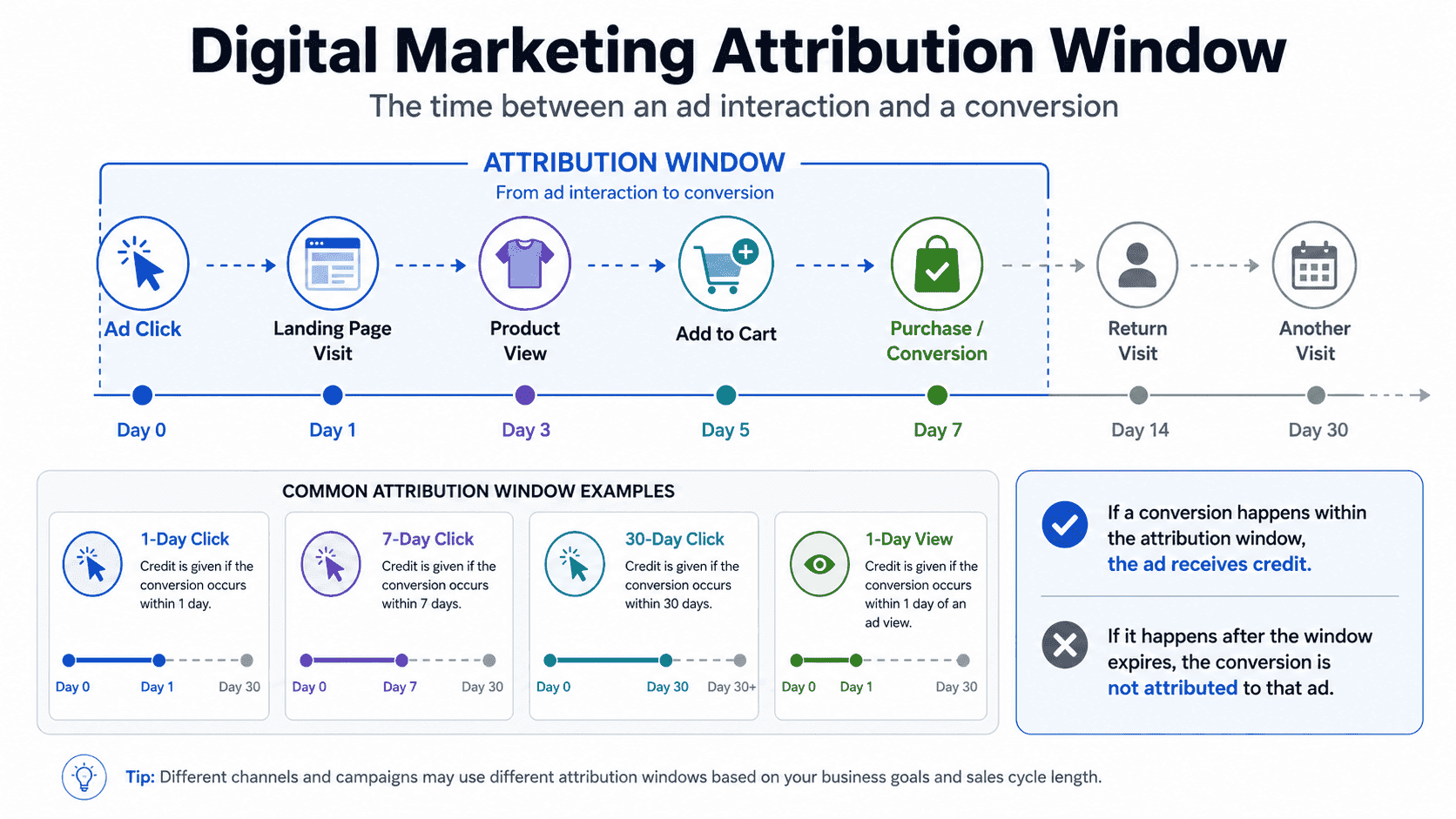
Understanding Attribution Windows: 1-Day, 7-Day, and 28-Day Explained
Marketing Attribution · 6 min read
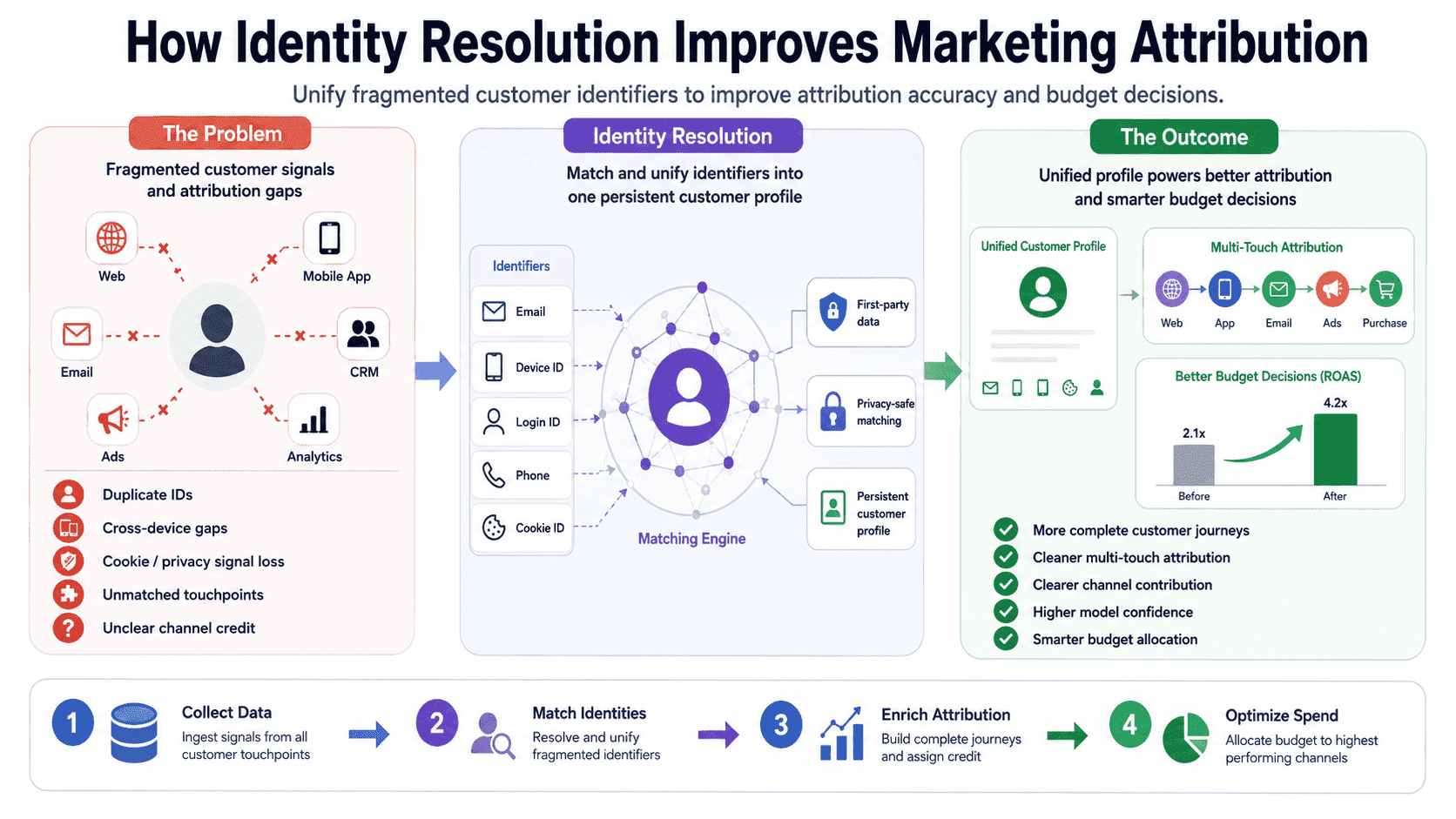
How Identity Resolution Marketing Attribution Improves Accuracy and Budget Decisions
Identity Resolution · 6 min read