
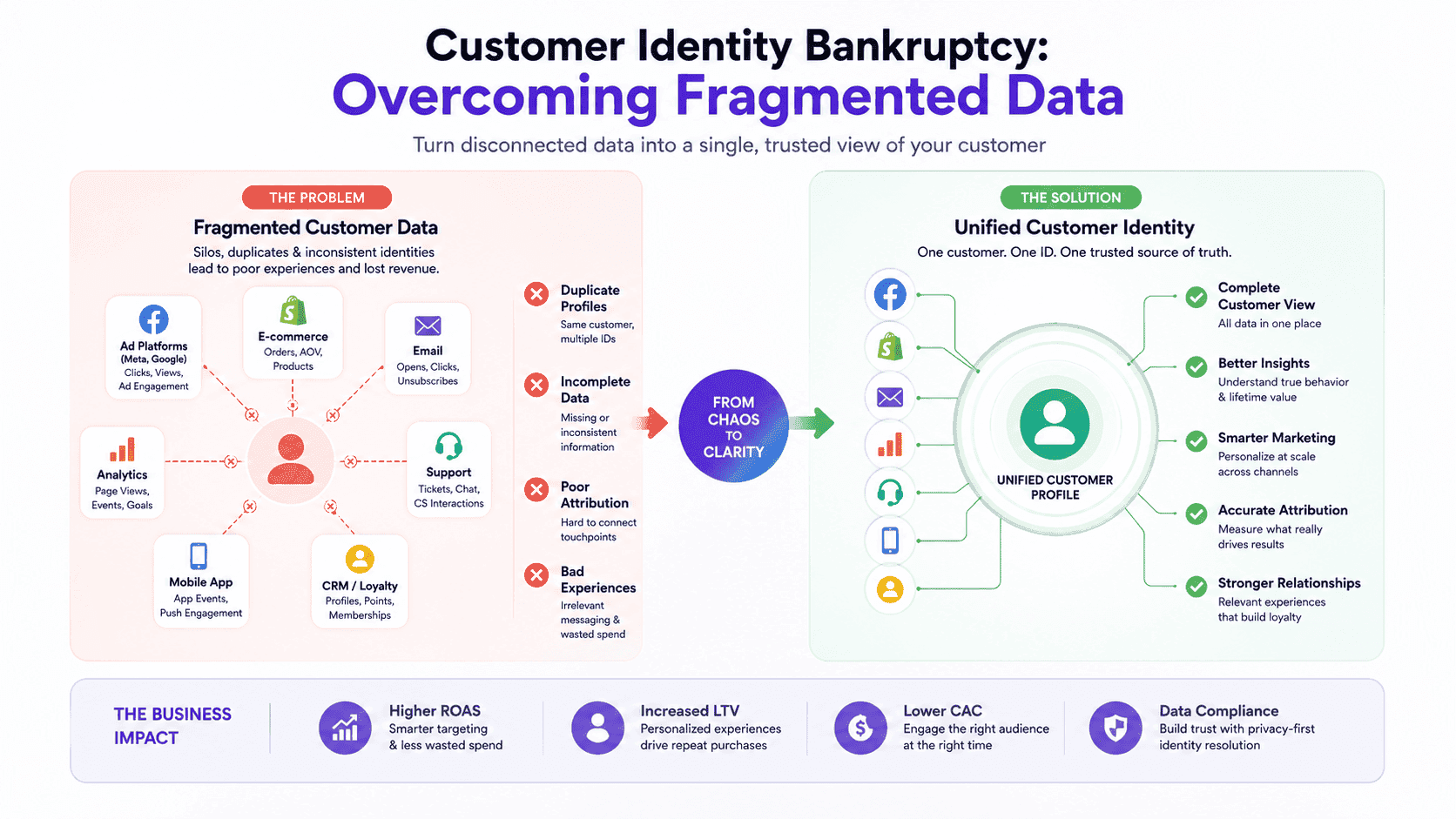
How fragmented data and disconnected marketing tools cause lost customer insights and hamper marketing effectiveness.
Ranjeet Ranjan
AI Executive Brief
Customer identity bankruptcy occurs when fragmented data and disconnected tools create multiple incomplete or conflicting customer records, leading to lost marketing opportunities, reduced ROI, and weakened customer loyalty. This article explores warning signs, risks, and practical strategies to regain control through real-time identity resolution and integrated marketing technology.
Modern brands collect data from ads, websites, apps, CRM, eCommerce, and support tools. But when this data stays fragmented, the same customer appears as many disconnected profiles. This creates attribution confusion, poor personalization, repeated targeting, and wasted marketing spend. This is Customer Identity Bankruptcy — when a brand has customer data, but cannot trust it enough to understand, target, or measure customers accurately.
Understanding Customer Identity Bankruptcy: Overcoming Fragmented Data and Disconnected Marketing Tools
If your marketing efforts are suffering from wasted spend, poor targeting, or inconsistent customer experiences, fragmented customer data and disconnected marketing tools may be to blame. This often causes a problem called "customer identity bankruptcy"—where brands lose a clear, unified view of their customers across channels. The result is lost opportunities, reduced marketing ROI, and weakened customer loyalty. In this article, you'll learn what drives identity bankruptcy, how to spot its warning signs, and practical strategies to regain control by unifying customer data and marketing technology.
The Business Impact of Customer Identity Bankruptcy
How Fragmented Data and Disconnected Tools Lead to Lost Customer Insights
Customer identity bankruptcy happens when a brand’s data systems contain multiple, incomplete, or conflicting records for the same person. This fragmentation often occurs because customer data is spread across CRM systems, ad platforms, analytics tools, and offline sources without proper connection. Disconnected marketing tools worsen this by failing to share or unify identities, creating isolated data silos and an incomplete picture of customer behavior and preferences.
Without a unified customer identity, marketers struggle to segment audiences accurately, personalize messaging effectively, or trace customer journeys across touchpoints. This can lead to targeting the same individual multiple times without coordination or failing to recognize loyal customers, treating them as new prospects. The consequence is inefficient spending, misaligned campaigns, and missed chances to build deeper customer relationships.
Risks to Marketing ROI, Customer Experience, and Strategic Decision-Making
Identity bankruptcy extends beyond operational inefficiencies to impact marketing ROI and customer experience. Inaccurate customer data undermines attribution models, causing flawed ROI calculations and misdirected budgets. Brands may overspend on underperforming channels or overlook their most valuable customers.
Additionally, inconsistent or incorrect customer information damages the customer journey, resulting in repetitive or confusing messaging that erodes trust. Leadership loses confidence in analytics and decision-making tools, complicating strategic planning and investments. Ultimately, identity bankruptcy threatens short-term campaign success and long-term customer lifetime value.
Diagnosing Customer Identity Bankruptcy in Your Organization
Key Symptoms and Early Warning Signs to Watch For
- Multiple customer records for the same individual across CRM or marketing platforms
- Inconsistent customer details—such as different emails or phone numbers in separate systems
- Conflicting activity data between sales, support, and marketing tools
- Attribution reports that do not align with actual business outcomes
- Difficulty segmenting audiences clearly or delivering consistent personalization
- Repeated campaigns targeting the same users due to missing identity integration
- Dashboards showing missing or outdated customer information regularly
Assessment Framework: Evaluating Data Fragmentation and Tool Integration
Use this practical framework to assess your risk of identity bankruptcy by examining two critical dimensions: the quality of your customer data and the connectivity of your marketing technology.
| Assessment Area | Diagnostic Questions | Indicative Risk Level |
|---|---|---|
| Customer Data Quality & Consistency | Are duplicate or incomplete customer records common across systems? Do customer attributes align consistently across CRM, marketing, and analytics? | High risk if data shows inconsistencies or duplication |
| Marketing Technology Connectivity | Do marketing and CRM tools share unified customer IDs? Is identity stitching automated and real-time? | High risk if tools function in silos without data sharing |
| Attribution and Analytics Reliability | Can customer journeys be confidently tracked across channels? Are attributions audited for accuracy regularly? | High risk if attribution models are untrustworthy or incomplete |
| Customer Journey Orchestration | Is communication personalized and consistent across touchpoints? Are tools able to activate unified data in real-time? | High risk if messaging is fragmented or inconsistent |
This framework highlights where fragmentation and disconnected tools create blind spots, helping prioritize remediation efforts.
Practical Strategies to Prevent and Address Identity Bankruptcy
How Real-Time Identity Resolution Consolidates Fragmented Customer Records
Real-time identity resolution is key to overcoming customer identity bankruptcy. It continuously matches and merges customer identifiers from multiple sources—like emails, device IDs, CRM data, and offline records—into a unified profile known as an identity graph.
By integrating and deduplicating data as it arrives, real-time resolution prevents fragmented or conflicting records from accumulating. This creates a reliable single source of truth marketers can use to personalize experiences, attribute marketing efforts accurately, and deliver consistent messaging.
Best Practices for Marketing Technology Integration and Data Unification
- Conduct a thorough audit of your marketing stack to identify disconnected tools and redundant data sources
- Focus on integrating platforms that support identity graph APIs or unified customer profiles
- Implement a central Customer Data Platform (CDP) to serve as the authoritative source for customer identities
- Establish data governance policies to enforce consistent attribute standards and update routines
- Automate data flows between CRM, advertising platforms, analytics, and journey tools to reduce manual errors
- Adopt privacy-compliant practices that reflect privacy-driven measurement limits and third-party data signal loss
Prioritizing Investments to Restore Unified Customer Profiles
Marketers should balance short-term fixes with long-term identity health. Begin by adopting or enhancing real-time identity resolution to consolidate fragmented records swiftly. Next, strategically integrate essential marketing technologies around a unified customer profile.
Supporting these efforts with attribution and analytics platforms built on unified profiles helps deliver trustworthy insights and ROI measurement. Finally, align journey orchestration tools with this data layer to enable consistent, personalized communication without channel conflicts.
Common Mistakes That Perpetuate Identity Bankruptcy and How to Avoid Them
- Choosing marketing tools without confirming their ability to unify customer identities
- Delaying data governance, leading to inconsistent attribute definitions and conflicting records
- Relying only on batch data imports rather than real-time data stitching, causing identity decay
- Oversimplifying cross-channel identity matching and customer segmentation complexities
- Ignoring privacy changes and third-party signal loss affecting identity linkage and attribution
- Focusing solely on acquisition data without including retention and behavioral signals in profiles
- Failing to continuously monitor and audit data quality, allowing fragmentation to resurface
Measuring Success: Metrics That Indicate Improved Customer Identity Management
- Decrease in duplicate or conflicting customer records across systems
- Improved accuracy and confidence in attribution models
- Higher percentage of marketing messages personalized using unified profiles
- Faster consolidation of profiles reflecting near real-time identity stitching
- Better completeness of key customer attributes used for segmentation
- Consistent unique customer counts across CRM, analytics, and marketing platforms
- More coherent customer journeys with fewer contradictory or overlapping campaign touchpoints
How DriveMetaData Helps Break the Cycle of Customer Identity Bankruptcy
Unified Customer Data Platform and Real-Time Identity Resolution
DriveMetaData offers a unified Customer Data Platform that consolidates fragmented customer records from diverse sources and marketing tools. Its real-time identity resolution continuously links and updates profiles to prevent identity decay and fragmentation, creating a trusted single source of truth that enables accurate segmentation and personalization.
Attribution and Analytics Built on Trusted Identity Graphs
Leveraging the unified identity graph, DriveMetaData’s marketing analytics and attribution provide reliable insights into the complete customer journey. This helps marketers and business leaders understand marketing ROI better, optimize budgets, and make confident, data-driven decisions that enhance customer experience and growth potential.
Next Steps: Taking Action to Regain Control Over Your Customer Data
Diagnostic Checklist to Assess Identity Fragmentation Today
- Inventory all current customer data sources and marketing platforms
- Identify how often duplicate or conflicting customer records occur
- Review integration points between CRM, analytics, and campaigns—are they real-time or batch?
- Assess if your tools support identity graphs or real-time profile stitching
- Evaluate attribution accuracy and check for channel inconsistency in reports
- Verify customer journey orchestration tools use unified profiles for personalization
- Document existing data governance and attribute standardization policies
- Confirm compliance with privacy-driven measurement requirements and manage signal losses
- Prioritize technology consolidation or integration efforts to minimize fragmentation
Addressing customer identity bankruptcy is increasingly critical as fragmented data and disconnected tools challenge marketing effectiveness. Using diagnostic frameworks and investing in real-time identity resolution and integrated technology can restore a unified customer view, improve marketing insight, and safeguard customer relationships in a privacy-aware environment.
Request a personalized demo to see how DriveMetaData’s integrated platform can unify your customer data and resolve identity bankruptcy.
Addressing customer identity bankruptcy is increasingly critical as fragmented data and disconnected tools challenge marketing effectiveness. Using diagnostic frameworks and investing in real-time identity resolution and integrated technology can restore a unified customer view, improve marketing insight, and safeguard customer relationships in a privacy-aware environment.
Attribution Audit
Find the gaps hiding in your attribution data.
Get a focused audit of campaign tracking, ROAS signals, and conversion paths before media spend leaks into blind spots.
Related Blogs
More from our insights
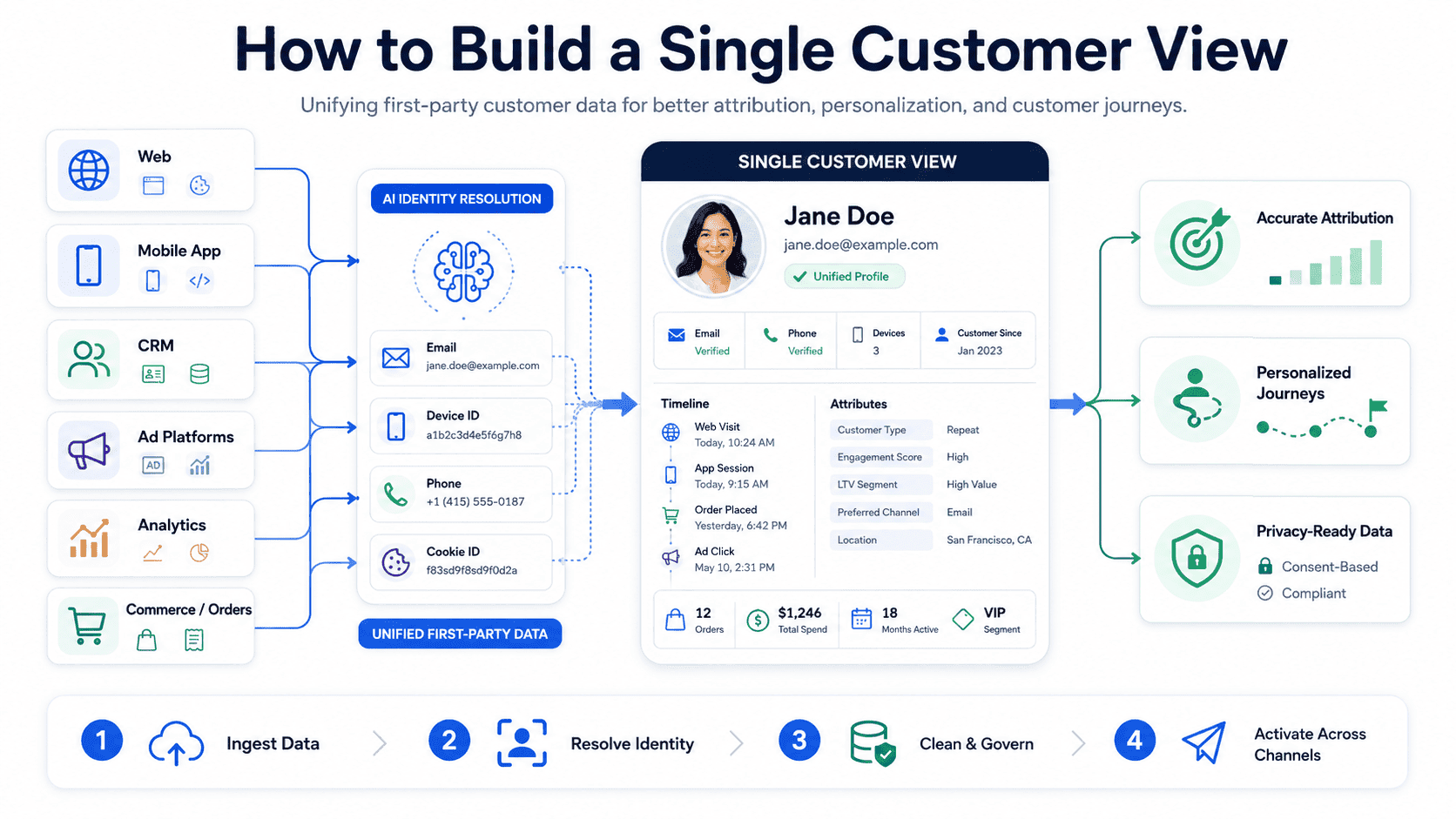
How to Build a Single Customer View Using Unified First-Party Customer Data
Customer Data Platform · 4 min read
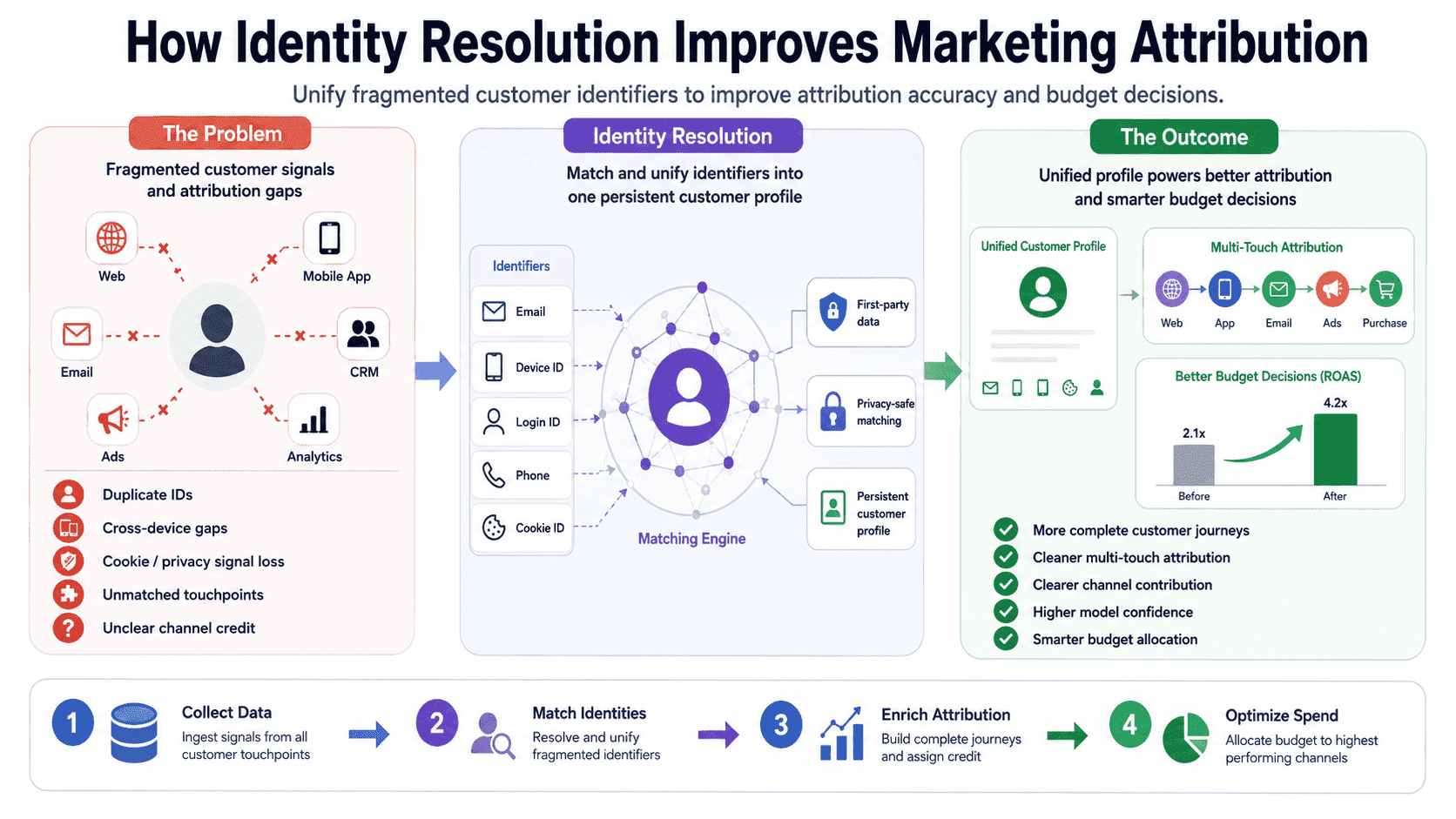
How Identity Resolution Marketing Attribution Improves Accuracy and Budget Decisions
Identity Resolution · 6 min read
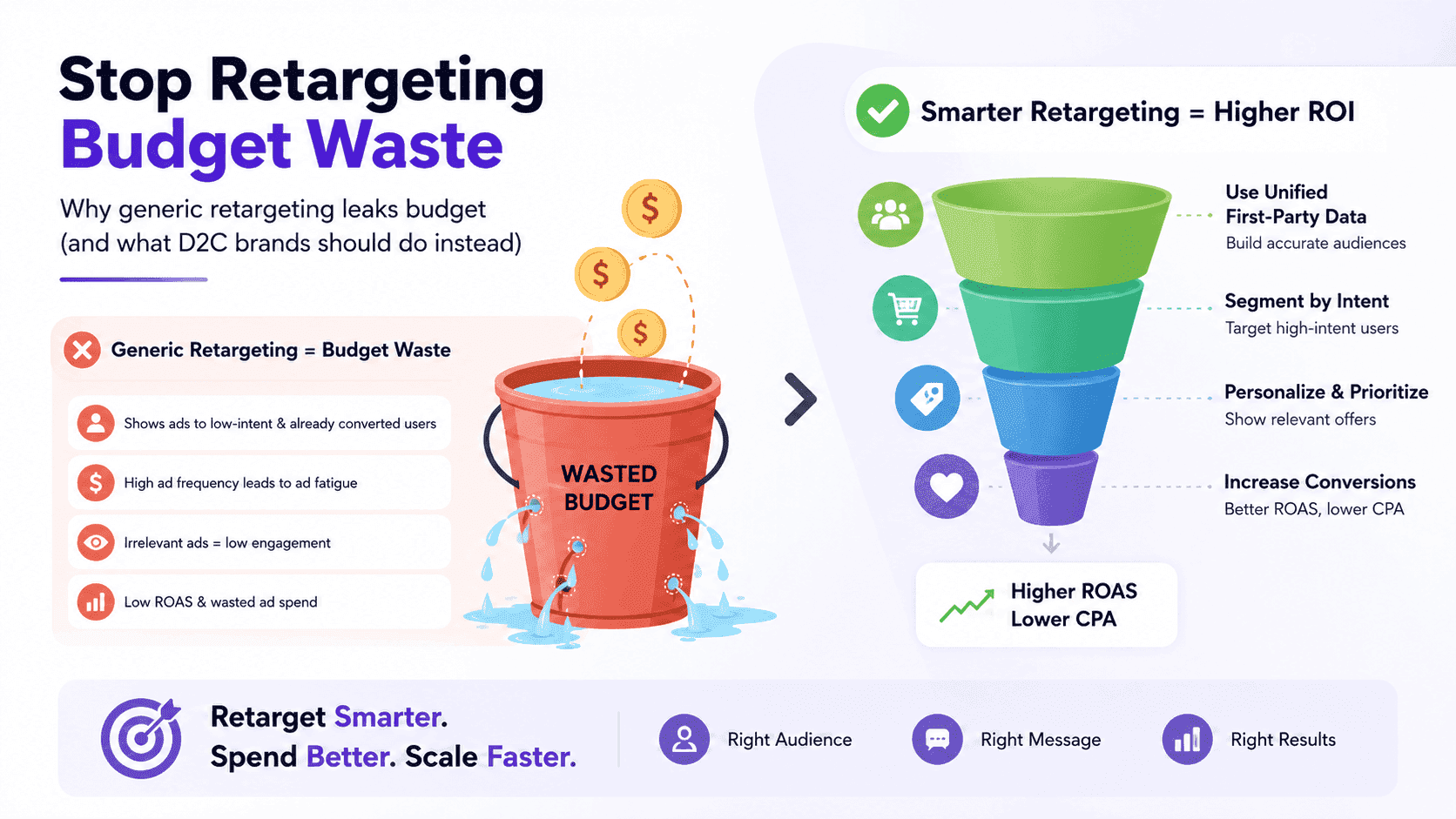
Retargeting Inefficiencies in D2C Brands: Avoiding Budget Waste and Doubling Customer Payments
Marketing Attribution · 5 min read