
Practical strategies for integrating AI agents in marketing workflows and measuring ROI effectively.
Unknown
AI Executive Brief
Marketing teams face challenges integrating AI agents, including fragmented data and privacy compliance. This article provides a framework for measuring AI marketing impact, actionable integration steps, and privacy-safe approaches to maximize personalization and engagement.
Marketing teams integrating AI agents face complex challenges—from managing fragmented data and ensuring privacy compliance to accurately measuring ROI amid attribution hurdles. Without clear strategies, campaigns risk inefficiency, wasted spend, and eroded customer trust. This article guides marketers through these challenges, offering a practical framework for measuring AI-driven marketing impact, actionable steps for smooth AI adoption, and privacy-safe approaches to maintain compliance and transparency while enhancing personalization and engagement.
Effective Strategies for Integrating AI Agents into Your Marketing Workflow
Understanding the Challenges of AI Agent Adoption in Marketing
Common Integration Roadblocks and Workflow Friction
AI agents promise streamlined marketing automation, but integrating them often reveals process obstacles. Fragmented customer data, legacy systems, and siloed teams delay campaign launches and complicate budget allocation. Incomplete or disconnected customer profiles undermine AI’s personalization capabilities. Poorly coordinated AI integrations may even create friction as manual and automated workflows clash, reducing campaign agility and effectiveness.
Business Risks of Inefficient AI Adoption and Attribution Blind Spots
Failing to adopt AI agents efficiently carries risks beyond operational delays. Without robust attribution, marketers cannot confidently pinpoint which AI-driven tactics generate value, leading to wasted budgets on low-impact activities and missed optimization opportunities. Additionally, privacy regulations and restrictions on tracking technologies complicate measurement, increasing compliance risks and potentially damaging customer trust if data use lacks transparency.
How AI Agents Enhance Marketing Automation and Customer Engagement
Key Use Cases for AI Agents in Campaign Management and Personalization
AI agents excel at automating repetitive tasks, generating real-time insights, and delivering personalized experiences at scale. Typical applications include dynamic ad targeting adapting to evolving customer behavior, automated orchestration of email and SMS journeys, predictive lead scoring to prioritize prospects, and personalized content recommendations. By promptly responding to customer signals, AI agents improve engagement without heavy manual effort.
Comparing AI Agents to Traditional Marketing Tools for Customer Journey Optimization
Unlike traditional marketing tools that depend on static rules and segmented audiences, AI agents dynamically analyze patterns across large datasets to adjust campaigns in real time. This enhances responsiveness and relevance throughout complex customer journeys. However, AI’s success relies on integrated, high-quality data and accurate cross-channel attribution—areas where legacy tools often fall short. Thus, AI agents complement rather than replace existing marketing systems.
Overcoming Attribution and ROI Measurement Challenges with AI Marketing
Framework for Measuring AI Agent-Driven Marketing Effectiveness
Effectively measuring AI’s impact requires a multi-layered approach combining data and qualitative insights. Begin by setting clear goals such as increasing conversions or boosting retention. Define KPIs directly tied to AI-influenced actions and employ multi-touch attribution models capable of handling partial or lost tracking signals. Use A/B tests to isolate AI contributions and conduct incremental lift analysis to measure true AI impact beyond baseline performance. Ensure analytics respect privacy constraints while still delivering actionable insights.
Managing Data Fragmentation and Privacy-Driven Measurement Constraints
AI marketing faces challenges from dispersed data sources and privacy-induced signal losses like cookie restrictions and declining third-party data reliability. Effective strategies include centralizing customer data into unified profiles, applying privacy-safe identity resolution to connect signals without exposing personal details, and leveraging probabilistic modeling to fill data gaps when deterministic tracking isn’t possible. These approaches help sustain attribution accuracy and compliance without sacrificing insight quality.
Navigating Privacy, Compliance, and Customer Trust When Using AI in Marketing
Privacy-Safe Data Practices and Identity Resolution as Compliance Enablers
Using AI agents responsibly demands strict adherence to privacy-safe practices. Identity resolution is key, enabling marketers to build anonymized, persistent customer profiles that link data across channels without exposing identifiable information. This supports compliance with GDPR, CCPA, and similar regulations by managing consent effectively, limiting data exposure, and enabling transparent governance. Paired with privacy-first analytics, identity graphs empower marketers to uncover insights while preserving customer trust.
Balancing Transparency and Automation to Maintain Customer Loyalty
Though AI agents automate many marketing functions, maintaining transparency about data use is essential for retaining customer trust and loyalty. Brands should clearly communicate the benefits of personalization and privacy protections, offering straightforward opt-out options. Ethical automation that respects preferences and avoids invasive tactics enhances reputation. Balancing AI-driven efficiency with customer control fosters long-term engagement in a privacy-conscious environment.
Practical Implementation Priorities and Common Mistakes to Avoid
Step-by-Step Integration of AI Agents with Existing Marketing Stacks
- Evaluate your current data infrastructure to identify gaps affecting AI inputs.
- Select AI agents supporting open integration standards and able to ingest unified customer data.
- Centralize data into a customer data platform with identity resolution to build reliable profiles.
- Phase in AI agents gradually, starting with simpler campaigns to validate effectiveness.
- Define and implement clear attribution models to track AI-driven conversions and optimize performance.
- Incorporate privacy-safe data governance and consent management alongside AI deployment.
- Train marketing teams on AI capabilities and establish oversight processes for manual intervention when needed.
- Continuously monitor AI-driven results and update integration based on analytics and compliance changes.
Typical Pitfalls and How to Prevent Them During AI Adoption
- Rushing deployments without cleaning or unifying customer data causes poor personalization and unreliable insights.
- Neglecting privacy compliance risks regulatory fines and erodes customer trust.
- Ignoring attribution complexities leads to unclear ROI and poor budget decisions.
- Treating AI agents as isolated tools rather than integrated components disrupts workflows.
- Skipping team training results in resistance and underutilization of AI capabilities.
- Failing to be transparent with customers can damage brand loyalty over time.
How DriveMetaData Supports Effective AI Agent Marketing Integration and Attribution
Unified Customer Profiles Through Identity Resolution
DriveMetaData’s platform resolves identities across fragmented data sources and channels to create persistent, privacy-compliant customer profiles. This unified data foundation enables AI agents to personalize campaigns with comprehensive, accurate insights while maintaining compliance with evolving privacy requirements.
Privacy-Compliant Attribution Engine for AI-Driven Campaign Measurement
Designed for privacy challenges and third-party signal loss, DriveMetaData’s attribution engine provides marketers clear visibility into AI-driven campaign performance. This supports accurate measurement of AI contributions and helps guide smarter budget allocation and marketing strategy adjustments.
Together, these features facilitate confident AI agent integration within existing marketing workflows, delivering improved data accuracy, attribution clarity, and privacy compliance.
Call to Action: Explore DriveMetaData’s Solutions to Enhance Your AI Marketing
To overcome AI marketing integration, attribution, and compliance challenges, consider how unified customer data and privacy-safe measurement can optimize your workflows. Request a demo of DriveMetaData’s AI-ready platform and discover how it can help your team deliver measurable, accountable, and privacy-aware AI-driven marketing campaigns.
FAQ
What are AI agents in marketing?
AI agents are automated software tools that use data and machine learning to perform marketing tasks such as personalization, campaign management, and journey orchestration with minimal manual intervention.
Why is measuring AI marketing ROI challenging?
Measurement challenges stem from fragmented data, privacy restrictions limiting tracking, and difficulty attributing results accurately to AI-driven actions, complicating evaluation of the true AI marketing impact.
How can privacy-safe data practices support AI marketing?
Privacy-safe practices use identity resolution and anonymized profiles to link customer signals without exposing personal data, ensuring compliance with privacy laws while enabling effective AI personalization and measurement.
What are common mistakes when integrating AI agents into marketing workflows?
Common errors include deploying AI without unified customer data, ignoring privacy compliance, neglecting attribution complexities, skipping team training, and lacking transparent communication with customers.
How can marketers start integrating AI agents effectively?
Start by auditing data quality and infrastructure, centralize customer profiles with identity resolution, integrate AI tools gradually, set clear metrics and attribution models, ensure privacy safeguards, and train teams for adoption and governance.
To overcome AI marketing integration, attribution, and compliance challenges, consider how unified customer data and privacy-safe measurement can optimize your workflows. Request a demo of DriveMetaData’s AI-ready platform and discover how it can help your team deliver measurable, accountable, and privacy-aware AI-driven marketing campaigns.
Attribution Audit
Find the gaps hiding in your attribution data.
Get a focused audit of campaign tracking, ROAS signals, and conversion paths before media spend leaks into blind spots.
Related Blogs
More from our insights
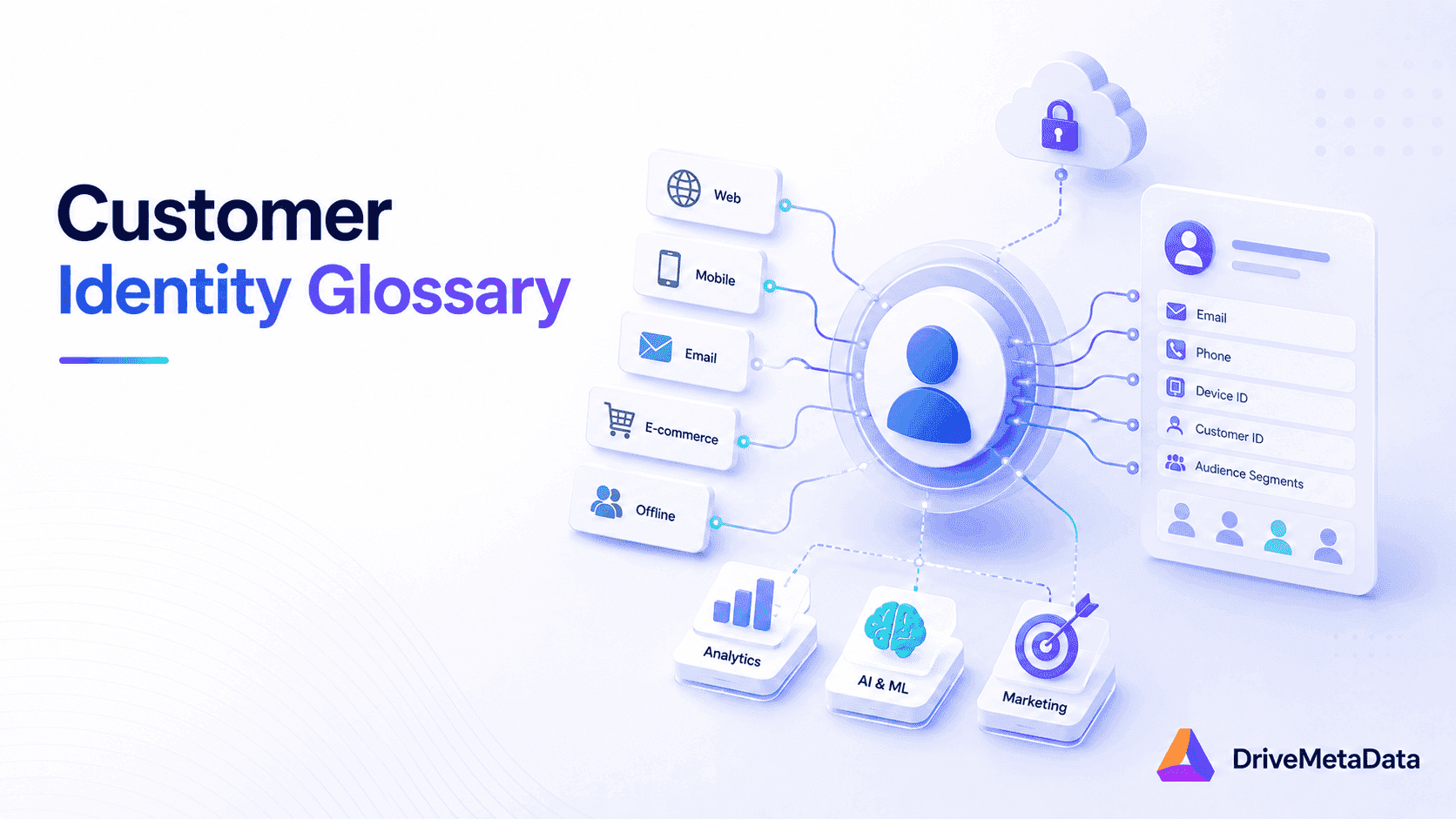
Customer Identity Glossary: Essential Terms for Marketing Success
Identity Resolution · 5 min read
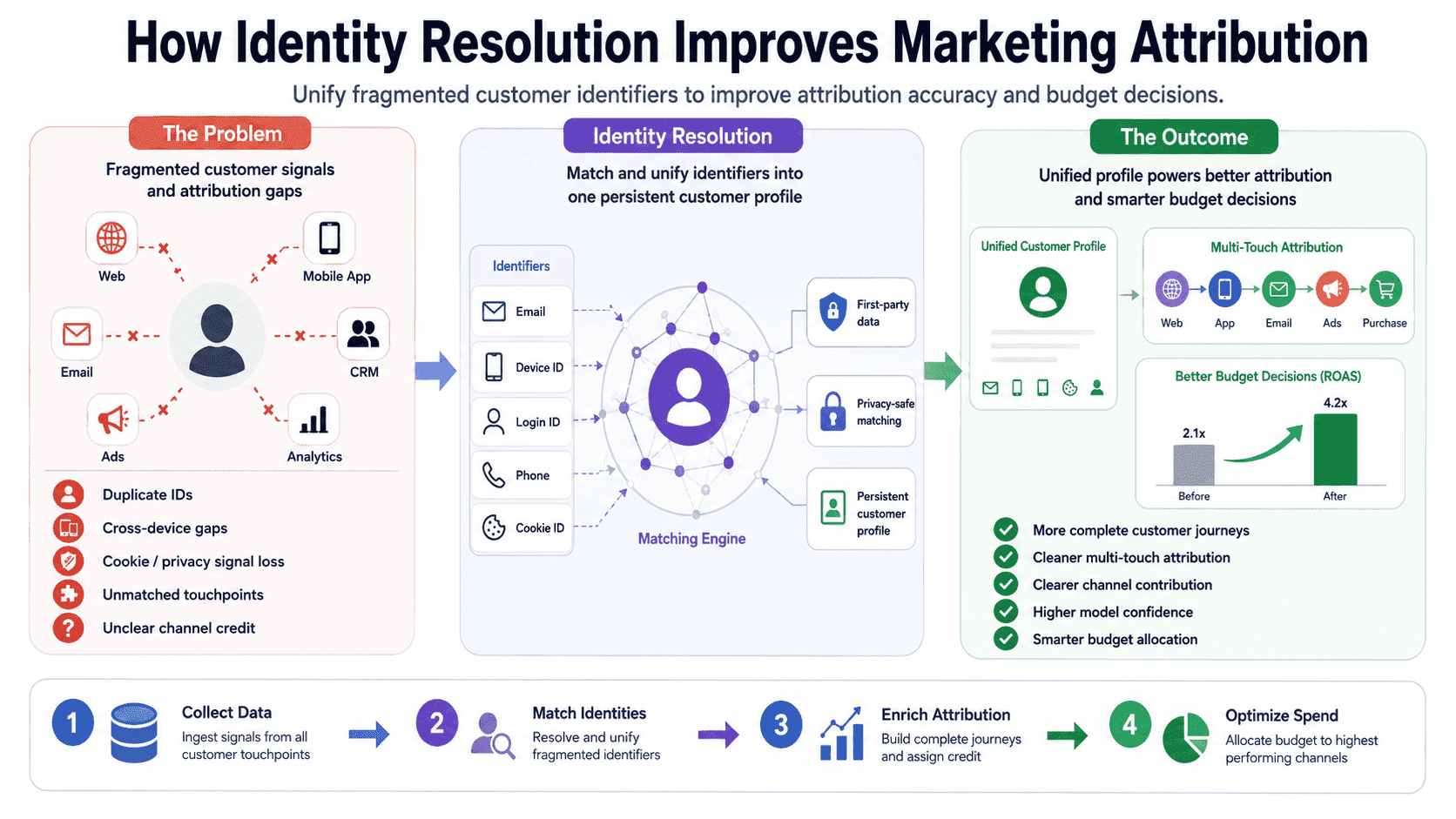
How Identity Resolution Marketing Attribution Improves Accuracy and Budget Decisions
Identity Resolution · 5 min read
Marketing Truth vs Marketing Claims: Your ROAS Is Not Your ROAS
Customer Data Platform · 13 min read