
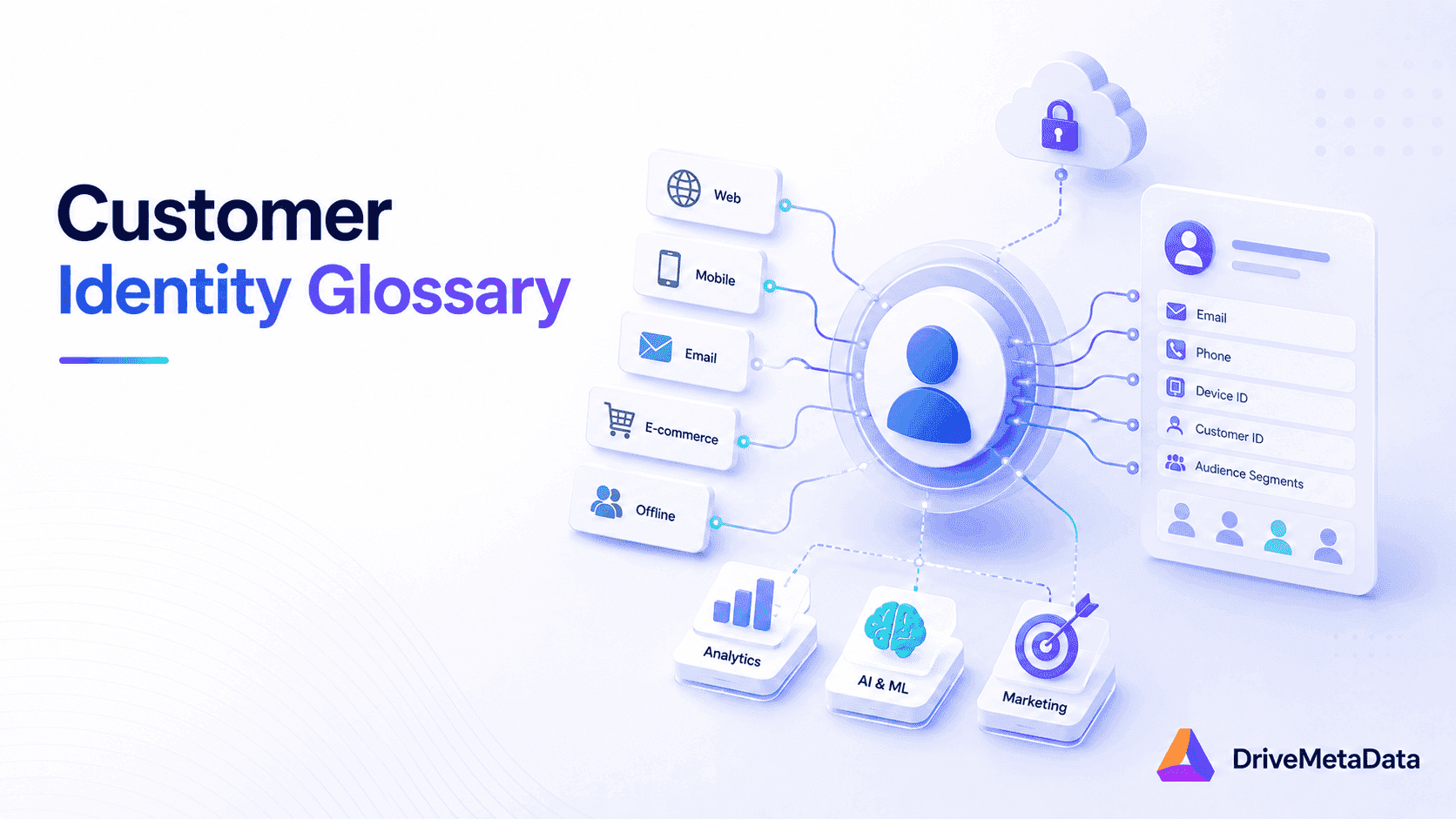
Key Terms Every Marketer Should Know to Navigate Customer Identity Challenges
Unknown
AI Executive Brief
Mastering core customer identity concepts is critical for marketing professionals to unify fragmented data, ensure privacy compliance, prevent fraud, and optimize campaign performance. This glossary clarifies essential terms to strengthen marketing impact and ROI.
Marketing teams handle vast amounts of dispersed customer data collected from web, mobile, CRM, and offline sources. Yet, confusion about core customer identity terms slows collaboration, undermines decision-making, and limits campaign success. Without a shared understanding, marketers struggle to unify identities, attribute revenue accurately, and deliver personalized experiences. This disconnect risks wasted budget, missed growth opportunities, and skepticism about the value of data-driven marketing.
The Growing Challenge of Customer Identity in Modern Marketing
Why Confusing Customer Identity Terms Hinders Marketing Effectiveness
Marketing teams handle vast amounts of dispersed customer data collected from web, mobile, CRM, and offline sources. Yet, confusion about core customer identity terms slows collaboration, undermines decision-making, and limits campaign success. Without a shared understanding, marketers struggle to unify identities, attribute revenue accurately, and deliver personalized experiences. This disconnect risks wasted budget, missed growth opportunities, and skepticism about the value of data-driven marketing.
Key Business Risks: Fragmented Data, Attribution Errors, and Privacy Challenges
Fragmented or duplicate customer profiles reduce personalization effectiveness and skew insights. Inaccurate identity linkage causes multi-touch attribution models to produce unreliable ROI figures, leading to inefficient spend and diminished confidence in marketing decisions. At the same time, evolving privacy regulations and increasing cookie restrictions add complexity to data governance and compliance. Failing to navigate these risks can result in regulatory penalties and damage to brand reputation. Mastering identity-related terminology and concepts is essential for sustaining marketing performance and legal compliance.
Core Customer Identity Terms Marketers Need to Know
Customer Identity Management (CIM)
Customer Identity Management involves collecting, unifying, and maintaining accurate customer profiles across all marketing touchpoints. Effective CIM enables recognition of the same customer despite changes across devices, channels, or data sources. This process manages identifiers like emails, device IDs, cookies, and offline data in a single system. CIM underpins personalization, loyalty programs, and accurate campaign measurement.
Identity Resolution vs. Identity Verification: Understanding the Difference
Though often confused, Identity Resolution and Identity Verification serve distinct roles in marketing. Identity Resolution automatically links separate data points—such as emails, device IDs, and purchase history—to build a unified customer profile, answering the question, "Are these records the same individual?" Conversely, Identity Verification confirms that a claimed identity during sign-up or transactions is authentic, serving to prevent fraud and unauthorized access.
| Term | Definition | Marketing Impact |
|---|---|---|
| Identity Resolution | Combining fragmented identifiers into a unified customer profile | Improves targeting accuracy and campaign measurement |
| Identity Verification | Validating user identity for security and fraud prevention | Protects data integrity and reduces fraudulent conversions |
Customer 360 and Unified Customer Profiles
A Customer 360 view aggregates all available data points to form a comprehensive profile. Unified Customer Profiles merge online behaviors, purchase history, CRM records, and offline interactions, providing full context on each customer’s journey and preferences. This holistic perspective enriches personalization strategies and marketing analytics.
Multi-Touch Attribution and Journey Analytics
Multi-touch Attribution assigns credit to multiple marketing interactions influencing a conversion rather than just the last click. It reveals the full customer journey across all channels, enabling improved budget allocation and tailored messaging. Journey Analytics complements attribution by analyzing the sequence, timing, and impact of touchpoints, uncovering where marketing investments deliver the most value.
Identity Security and Privacy Terms Impacting Marketing Strategies
Privacy-First Data Governance
Privacy-First Data Governance governs how customer data is managed in line with regulations such as GDPR and CCPA. It emphasizes respecting user consent, preferences, and data protection without compromising measurement or personalization capabilities. This approach involves secure data handling, anonymization where appropriate, and transparent policies to maintain customer trust.
Identity Access Management in Marketing
Identity Access Management (IAM) controls internal access to customer data and marketing systems. Effective IAM ensures sensitive identity information is handled only by authorized users, reducing the risk of breaches or misuse. In marketing, IAM aligns data security practices with privacy rules while enabling secure, compliant customer engagement.
Fraud Detection and Prevention Terminology
Fraud Detection identifies suspicious or invalid activity—such as bot traffic, click fraud, and identity spoofing—that can distort marketing ROI and reduce data quality. Fraud Prevention mechanisms help protect ad budgets by filtering out fake conversions and maintaining the integrity of customer data.
How Customer Identity Concepts Drive Marketing Performance and ROI
The Impact of Identity Resolution on Campaign Attribution
Identity Resolution merges fragmented customer data to avoid duplicate profiles, resulting in more accurate multi-touch attribution. By precisely crediting each marketing touchpoint, marketers can optimize budget allocation and refine campaigns to maximize ROI.
Role of AI in Customer Segmentation and Personalization
AI uses unified customer identities to analyze behaviors and predict preferences, enabling more intelligent segmentation and personalized experiences. AI-driven models detect subtle patterns across multiple channels and touchpoints, supporting smarter messaging and efficient resource deployment.
Overcoming Identity Challenges in Omnichannel Marketing
Customers engage across web, mobile, email, and offline channels. Without effective identity linkage, these interactions get mistakenly treated as separate individuals, fragmenting customer journeys and limiting personalization. Addressing this requires integrating diverse data sources and applying identity resolution to unify insights and improve performance attribution.
A Practical Framework to Implement Customer Identity Solutions
Readiness Criteria and Prioritization for Identity Initiatives
- Evaluate the degree of customer data fragmentation and identify profile gaps
- Define clear marketing goals for identity use cases like personalization and attribution
- Assess technology infrastructure and integration capabilities for unifying data
- Ensure privacy compliance readiness and establish robust data governance policies
- Prioritize identity linkages directly tied to revenue-impacting campaigns
Common Pitfalls to Avoid in Customer Identity Management
- Ignoring privacy regulations and neglecting user consent requirements
- Managing identity data in silos rather than as unified profiles
- Confusing identity verification processes with resolution tasks
- Overloading systems with low-quality or stale customer data
- Relying solely on last-click attribution without considering multi-touch impacts
Measuring Success: Key Metrics for Identity Solution Impact
- Growth in unified customer profiles and reduction in duplicate records
- Improved accuracy and transparency of multi-touch attribution and ROI
- Enhanced campaign performance enabled by AI-driven customer segmentation
- Decrease in fraud-related invalid conversions and ad spend wastage
- Positive compliance audit outcomes and reduced privacy incidents
How DriveMetaData Supports Marketers with Unified Customer Identity
Bridging Complex Identity Technology and Marketing Intelligence
DriveMetaData connects technical customer identity management with actionable marketing insights. Its AI-powered Customer Data Platform consolidates identities across channels into clean, unified profiles, giving marketers a clear view of their customers in real time.
Embedding Privacy-First Governance and Fraud Protection
DriveMetaData integrates privacy-first data governance to keep compliance in focus while protecting customer data. Its built-in fraud detection preserves data quality and safeguards marketing budgets against invalid activities.
Leveraging AI for Attribution and Customer Segmentation
With AI-powered multi-touch attribution and customer segmentation capabilities, DriveMetaData links clear customer identity to campaign optimization. This enables smarter resource spending and more personalized marketing engagement.
Call to Action: Take Control of Your Customer Identity Strategy Today
Explore tools and frameworks that translate complex identity concepts into clear, actionable marketing strategies. Request a demo of platforms integrating identity resolution, privacy-first governance, fraud detection, and AI-driven analytics to gain confidence and accelerate revenue-driven marketing decisions.
FAQ
What is the difference between identity resolution and identity verification?
Identity resolution links multiple data points to create a unified customer profile, while identity verification confirms that a claimed identity is authentic to prevent fraud.
Why is multi-touch attribution important in marketing?
Multi-touch attribution assigns credit to all marketing interactions influencing a conversion, allowing marketers to optimize budgets and messaging effectively.
How does privacy-first data governance affect marketing strategies?
It ensures customer data collection and use comply with regulations and user consent, protecting privacy without sacrificing personalization or measurement capabilities.
What are common challenges when managing customer identity?
Challenges include fragmented data, confusing identity terms, ignoring privacy laws, poor data quality, and relying only on last-click attribution.
How can AI improve customer segmentation and campaign performance?
AI analyzes unified customer data to identify behavior patterns and preferences, enabling smarter segmentation and more personalized, effective campaigns.
Customer identity challenges no longer need to block marketing progress or increase risk. By mastering essential identity terms and leveraging privacy-conscious, AI-powered identity solutions, marketers can improve attribution accuracy, enhance personalization, reduce fraud, and maintain compliance. A strategic and structured approach transforms fragmented data into unified intelligence with measurable business impact.
Attribution Audit
Find the gaps hiding in your attribution data.
Get a focused audit of campaign tracking, ROAS signals, and conversion paths before media spend leaks into blind spots.
Related Blogs
More from our insights
Shopify Marketing Attribution Across Meta, Google Ads, and Email: A Revenue Truth Framework
Customer Data Platform · 11 min read
Shopify Customer Journey Attribution: Multi-Touch Models & Repeat Order Tracking
Customer Data Platform · 6 min read
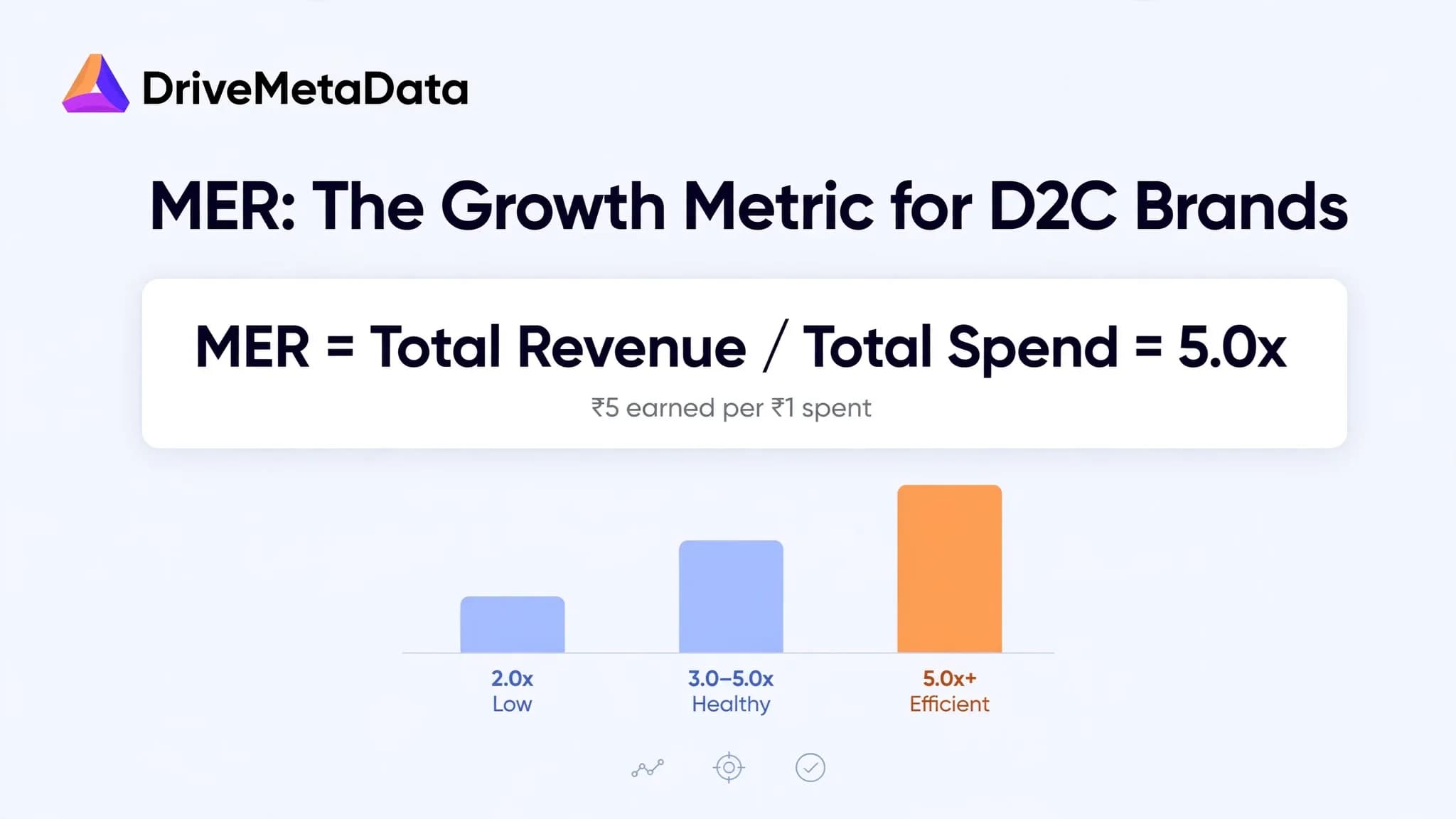
Marketing Efficiency Ratio (MER) Needs A Warning Label For D2C Growth
Customer Data Platform · 8 min read