
Understanding multi-touch attribution, repeat order tracking, and privacy in Shopify marketing
Ranjeet Ranjan
AI Executive Brief
This article guides marketing professionals and ecommerce store owners using Shopify on how to implement customer journey attribution that captures multi-touch interactions from first click through repeat purchases and lifetime value while ensuring privacy compliance. It presents attribution models, tracking methods, and AI-powered analytics to optimize marketing ROI and customer retention.
Shopify marketers struggle when customer data is fragmented across multiple platforms, obscuring how marketing channels drive acquisitions and repeat purchases. This lack of clarity leads to inefficient budgets, missed revenue, and risks around privacy compliance. Without effective Shopify customer journey attribution, campaigns can’t be optimized for repeat business and maximizing customer lifetime value (LTV), leaving growth to chance. This article guides you through attribution models that capture multi-touch journeys, methods to track and connect repeat orders to acquisition sources, and privacy-first governance. You'll gain a practical framework to evaluate, implement, and optimize an attribution strategy that increases marketing ROI and supports sustained growth.
The Challenge of Accurate Customer Attribution in Shopify Ecommerce
How Fragmented Data Undermines Marketing Performance
Shopify stores engage customers across websites, apps, ad platforms, CRMs, and offline channels. When this customer data exists in silos, marketers lack a unified view of the full journey. Fragmentation prevents accurate attribution of conversions and repeat purchases, causing marketers to undervalue key channels—especially those initiating early interest or nurturing long-term loyalty. This leads to guesswork in budget allocation, reduced marketing efficiency, and stifled growth potential.
Business Risks of Incomplete Attribution
Without a clear understanding of customer journeys, marketers risk overspending on acquisition channels that do not drive long-term value, while underfunding retention and repeat purchase drivers. This imbalance impacts overall revenue and reduces customer lifetime value. Additionally, incomplete data tracking raises compliance risks under privacy regulations like GDPR and CCPA, exposing brands to penalties and damaging consumer trust.
Attribution Models for Shopify: From First Click to Multi-Touch
Understanding the Limits of First Click Attribution
First click attribution assigns conversion credit to the very first marketing touchpoint. While simple and useful for identifying acquisition channels, this model ignores later interactions like retargeting, email nurturing, or social engagement that influence repeat orders and loyalty. Overreliance on first click can misdirect budget away from essential touchpoints supporting sustained customer value.
Benefits of Multi-Touch Attribution in Shopify Marketing
Multi-touch attribution (MTA) distributes credit across multiple marketing touchpoints in the customer’s purchase path. This approach better mirrors complex ecommerce journeys by recognizing the role of multiple channels in acquisition and retention. Common MTA models include linear attribution (equal credit), time-decay (weighted by recency), and algorithmic methods (data-driven weights). For Shopify stores, MTA provides richer insights into how combined channels drive both initial and repeat sales.
Selecting the Right Attribution Model for Your Shopify Store
Choose your attribution model based on the complexity of your customer journey, your data maturity, and marketing objectives. Early-stage or simple funnels might start with first click attribution but most stores benefit from multi-touch approaches that balance simplicity with nuance—like time-decay or linear models. As your analytics capabilities evolve, consider advanced algorithmic models that integrate repeat purchase data for more accurate insights.
Tracking Repeat Orders and Connecting Them to Acquisition Sources
Why Linking Repeat Orders Drives Retention and Growth
Repeat orders heavily influence long-term revenue and customer lifetime value in Shopify ecommerce. However, many marketers fail to trace these repeat purchases back to their original acquisition campaigns, leading to optimization focused only on first sales. Connecting repeat orders to acquisition sources reveals which channels truly nurture loyal, high-value customers and supports effective retention marketing.
Techniques for Linking Repeat Purchases to Marketing Campaigns
Reliable repeat purchase attribution requires integrating Shopify order data with campaign metadata and customer IDs. Methods include: persistent user identifiers for cross-session linking; cookies or device fingerprinting (while respecting privacy and cookie rules); CRM and loyalty program integration capturing long-term customer profiles; tagging order records with acquisition details; and identity resolution platforms to unify data across channels ensuring continuous attribution for repeat events.
Avoiding Common Pitfalls in Repeat Order Attribution
- Dropping attribution links when there is a long gap between purchases.
- Relying only on last-touch attribution, which ignores acquisition channel contribution.
- Failing to unify data across platforms, resulting in incomplete customer profiles.
- Missing offline repeat purchases and CRM data in attribution analyses.
- Underestimating impact of privacy changes leading to data loss in tracking.
Measuring and Increasing Customer Lifetime Value with Attribution Insights
Calculating Customer Lifetime Value (LTV) Using Attribution Data
Customer lifetime value estimates the total revenue generated by a customer during their relationship with your brand. In Shopify, LTV integrates order history, purchase frequency, average order value, and customer lifespan. Attribution links these metrics to acquisition sources, enabling marketers to identify channels that bring in high-quality customers and optimize budget toward sustainable growth rather than simple volume.
Segmenting Customers with Attribution for Personalized Retention
Attribution data supports effective customer segmentation by revealing how different groups engage with marketing channels and convert over time. Segments based on acquisition channels, engagement behavior, or predicted lifetime value allow marketers to customize retention strategies—personalizing offers, email flows, and incentives to maximize long-term customer value.
Enhancing LTV Forecasting with Predictive AI
Predictive AI analyzes historical attribution and purchase data to forecast lifetime value with greater precision. These models detect subtle patterns traditional analytics may miss, such as early engagement signals or channel influence on repeat behavior. Used alongside expert judgment, AI-driven forecasts help allocate budgets more efficiently and tailor marketing to high-potential customer segments.
Privacy-First Data Governance and Its Impact on Shopify Attribution
Complying with Privacy Regulations in Ecommerce Attribution
Privacy regulations like GDPR and CCPA, along with declining third-party cookie reliability, require marketers to adopt responsible data practices. Collecting and processing personally identifiable information must be transparent, consent-driven, and compliant. Ignoring these constraints risks regulatory penalties and consumer trust erosion, making privacy-first attribution essential for sustainable marketing.
Implementing Privacy-Friendly Identity Resolution
Identity resolution matches customer data across devices and channels, forming a unified customer view crucial for attribution. Privacy-conscious methods prioritize first-party data, anonymized or hashed identifiers, and clear consent signals. Transparency and robust governance not only ensure compliance but also build customer trust, enabling accurate attribution without compromising privacy.
Balancing Real-Time Data Needs with Privacy Governance
Effective Shopify attribution requires timely data from web, mobile, CRM, advertising, and offline interactions. To balance these demands with privacy rules, marketers should design data architectures that control data flows, anonymize when appropriate, and support dynamic consent management. This approach sustains marketing agility while maintaining compliance.
Framework for Implementing Effective Customer Journey Attribution in Shopify
Step 1: Unify Data Across All Customer Touchpoints
Start by integrating data from your Shopify store, advertising platforms, CRM, mobile analytics, and offline sources into a single, unified customer data layer. Consistent customer identifiers or identity resolution are essential to maintain accurate, cross-channel views.
Step 2: Choose and Apply the Appropriate Attribution Model
Assess your customer journey's complexity, data quality, and marketing goals to select the right attribution model. Begin with time-decay or linear multi-touch models for nuanced insights, and transition toward algorithmic models as your data capabilities mature.
Step 3: Integrate Repeat Order and Lifetime Value Metrics
Incorporate repeat purchase tracking and customer lifetime value into your analytics. Link repeat orders back to acquisition channels, and leverage predictive analytics to identify high-value segments for targeted retention campaigns.
Step 4: Ensure Privacy Compliance and Strong Data Governance
Implement transparent data policies, secure identity resolution, and customer consent management. Regularly audit compliance with relevant privacy laws to adapt data practices as needed.
Step 5: Measure Performance and Continuously Refine Attribution
Establish KPIs including channel ROI with repeat purchase contribution, lifetime value forecast accuracy, and retention rates. Use these metrics to optimize attribution models, data integrations, and marketing activations over time.
Common Challenges and Mistakes to Avoid in Shopify Attribution
Data Silos Preventing Complete Customer Views
Failing to integrate data from all platforms leads to partial views and inaccurate attribution, resulting in misguided marketing decisions.
Overreliance on Single-Touch Attribution
Solely using first or last click attribution oversimplifies purchaser journeys and undervalues channels critical for customer retention.
Ignoring Repeat Purchase Tracking and LTV Analysis
Neglecting repeat orders restricts marketing optimization to short-term gains, missing opportunities for sustained profitability.
Failing to Adapt to Privacy-Driven Changes
Continuing to rely on deprecated cookies or non-compliant data practices risks chronic data loss and legal issues.
How DriveMetaData Supports Comprehensive Shopify Customer Journey Attribution
Unified Multi-Touch Attribution and Customer Journey Analytics
DriveMetaData delivers an AI-powered platform integrating multi-touch attribution with customer journey analytics built for Shopify ecommerce. It connects acquisition data, repeat purchase tracking, and predictive lifetime value analysis in one unified system.
AI-Powered Segmentation and Predictive Lifetime Value Modeling
The platform’s AI capabilities identify high-potential customer segments and forecast lifetime value, empowering smarter budget allocation and personalized retention marketing.
Privacy-First Data Governance and Real-Time Identity Resolution
DriveMetaData prioritizes privacy-first governance with tools for compliant identity resolution across channels, delivering accurate real-time attribution without compromising privacy.
Omnichannel Data Activation for Marketing Optimization
With real-time event tracking and omnichannel activation, DriveMetaData helps marketers efficiently optimize campaigns and retention programs using complete customer intelligence.
FAQ
What is multi-touch attribution, and why is it better than first click attribution for Shopify stores?
Multi-touch attribution assigns credit to multiple marketing touchpoints across the customer journey, providing a more complete view of how channels contribute to acquisition and repeat purchases. Unlike first click attribution, it captures nurturing activities and retention drivers essential for Shopify ecommerce growth.
How can I track repeat purchases and link them to the original marketing campaign in Shopify?
By integrating Shopify order data with campaign metadata and customer IDs, you can use persistent identifiers, CRM data, and identity resolution platforms to connect repeat orders back to acquisition sources, ensuring a full view of customer value.
Why is privacy-first data governance important in Shopify attribution?
Privacy-first governance ensures compliance with regulations like GDPR and CCPA, protects customer data, maintains consumer trust, and enables marketers to collect and process data transparently without sacrificing attribution accuracy.
How does predictive AI improve customer lifetime value forecasting?
Predictive AI analyzes historical marketing and purchase data to detect patterns and early signals, forecasting lifetime value more accurately than traditional methods. This supports better segment targeting and budget decisions.
DriveMetaData delivers a unified, AI-powered platform for Shopify customer journey attribution. By integrating multi-touch attribution, repeat purchase tracking, predictive lifetime value analysis, and privacy-first governance into one system, marketers can optimize campaigns, increase retention, and grow sustainably with complete customer intelligence.
Attribution Audit
Find the gaps hiding in your attribution data.
Get a focused audit of campaign tracking, ROAS signals, and conversion paths before media spend leaks into blind spots.
Related Blogs
More from our insights
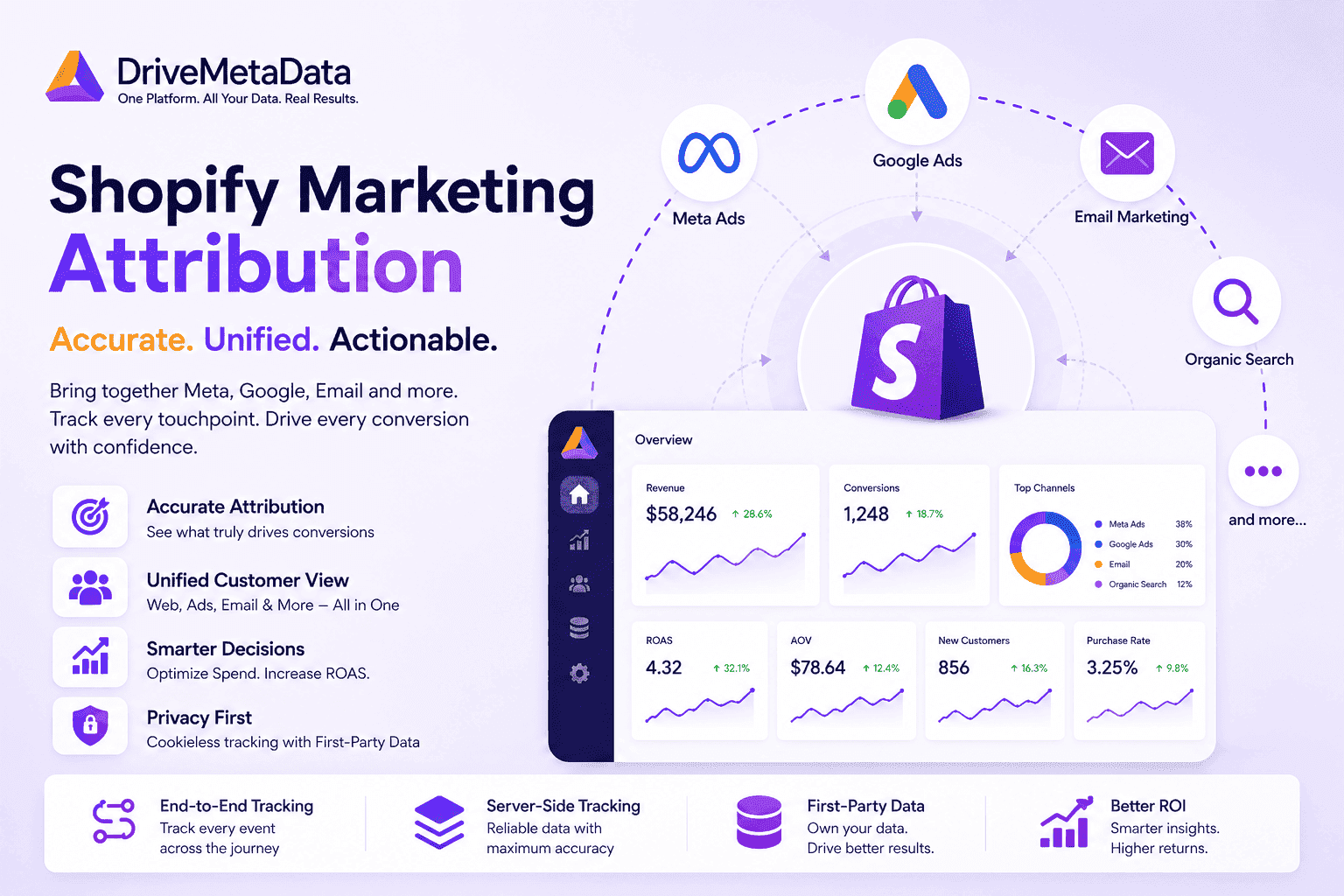
Shopify Marketing Attribution Across Meta, Google Ads, and Email: A Revenue Truth Framework
Customer Data Platform · 11 min read
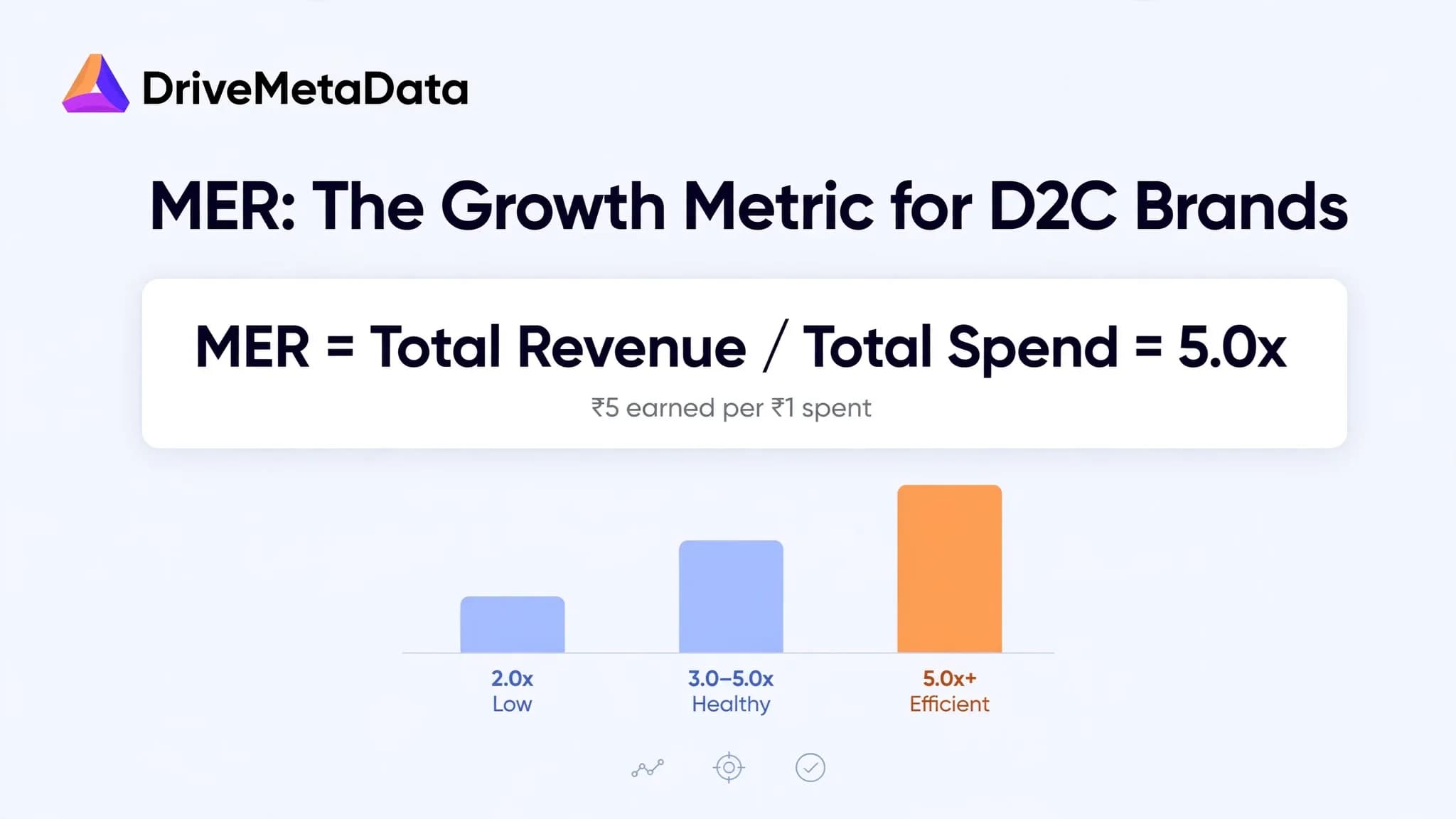
Marketing Efficiency Ratio (MER) Needs A Warning Label For D2C Growth
Customer Data Platform · 8 min read
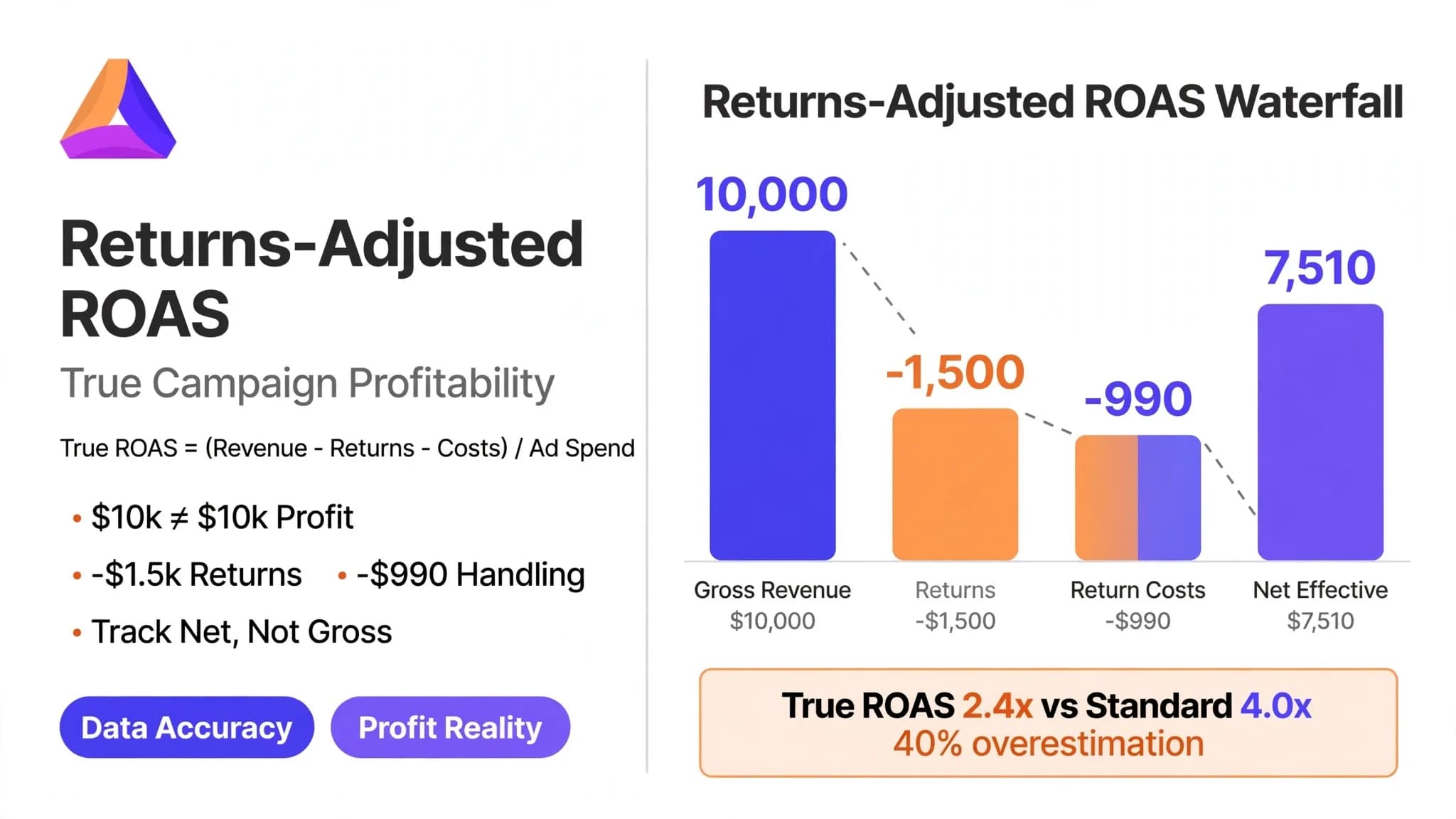
Returns-Adjusted ROAS: Formula, Calculation & How to Measure True Ecommerce Profitability
Customer Data Platform · 11 min read