
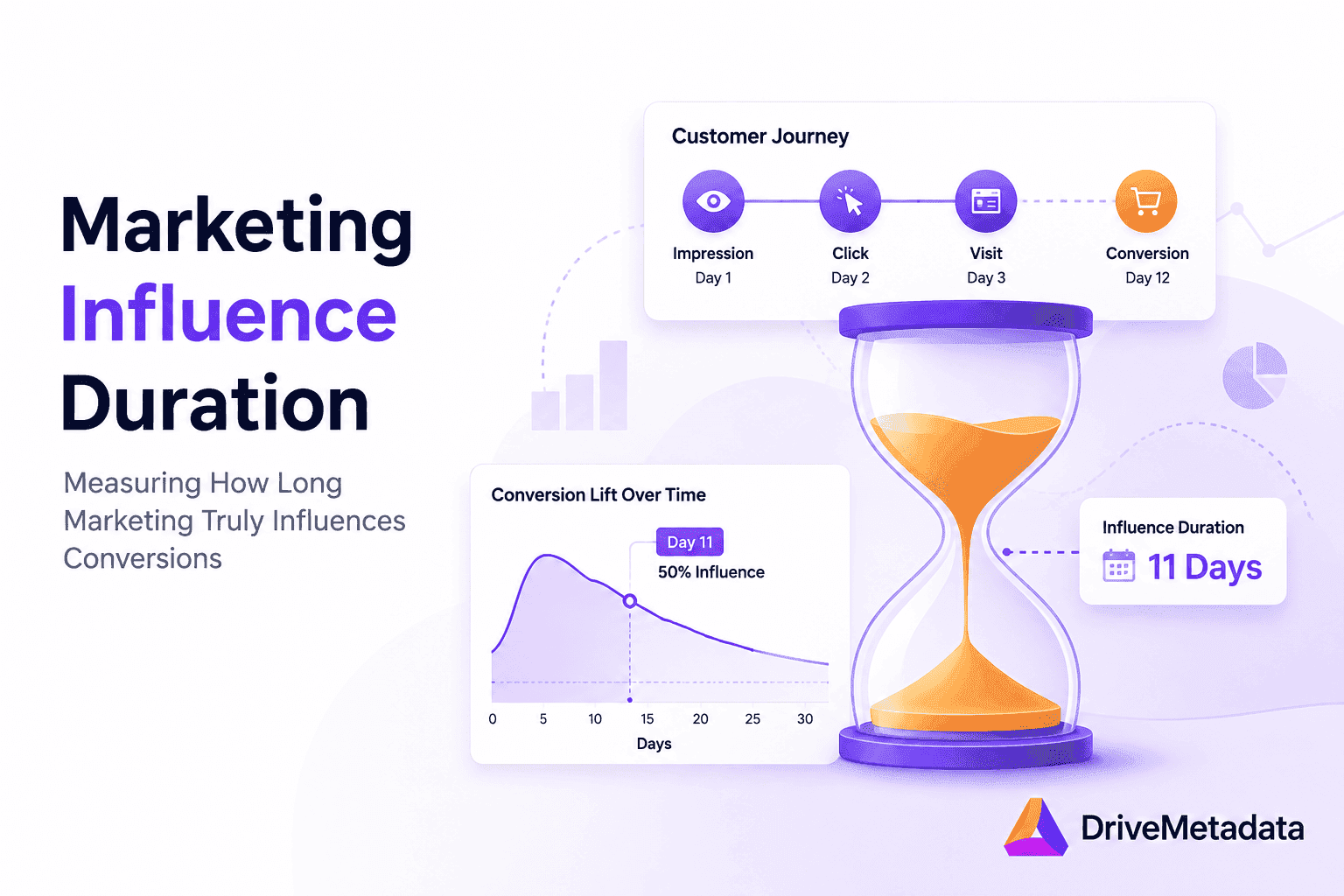
Applying time-based decay models for more accurate marketing attribution and optimized campaign budgets.
Ranjeet Ranjan
AI Executive Brief
This article introduces the Marketing Influence Half-Life™ framework, a practical method to quantify how marketing impact decays over time. It explains the challenges marketers face measuring influence duration, the data considerations necessary to build customer influence timelines, and a step-by-step approach to incorporate influence duration into smarter attribution and campaign optimization. Understanding influence duration helps improve ROI by aligning credit with actual temporal impact and optimizing budget allocation.
Marketers struggle to pinpoint how long their campaigns truly affect customer decisions after initial exposure—a key factor for measuring ROI accurately and optimizing spend. Without knowing the precise duration of marketing influence, teams risk misattributing conversions, overspending on low-impact interactions, or missing delayed purchase opportunities. This article introduces the Marketing Influence Half-Life™ framework, a practical model to quantify how marketing impact decays over time. You will learn the challenges marketers face measuring influence duration, data best practices for building customer influence timelines, and a structured approach to incorporate influence duration into smarter attribution and campaign optimization.
Why Understanding Marketing Influence Duration Is Critical for ROI and Budget Decisions
Marketing influence is a gradual, time-sensitive process where each customer interaction shapes buying decisions over a period—sometimes extending well beyond the last touchpoint. Knowing the precise influence duration answers vital questions: When should credit for conversions be assigned? How long should campaigns run to maximize return? How should budget be split between early awareness and last-touch activation? Without accurate influence duration measurement, marketers often rely on static or arbitrary attribution windows that distort campaign performance insights. This leads to inefficient budget allocation, misaligned KPIs, and ineffective campaign timing.
Risks of Misjudging the Marketing Influence Window
Setting influence windows too short risks missing delayed conversions influenced by earlier touchpoints, resulting in undervalued campaign credit and missed strategic insights. Conversely, overly long windows inflate ROI by crediting stale interactions not actually driving conversions, which wastes budget. Ignoring variations in influence duration across channels, campaigns, or customer segments obscures where and when marketing truly delivers value. These errors undermine confidence in measurement, complicate decision-making, and weaken marketing’s ability to prove its impact.
Introducing the Marketing Influence Half-Life™: A Time-Based Model for Attribution
The Marketing Influence Half-Life™ borrows from physics’ half-life concept to quantify how a marketing interaction’s influence diminishes over time. It measures the time required for a campaign’s impact to reduce by 50%, creating a decay curve rather than relying on fixed attribution windows. This allows marketers to more precisely model how influence fades but persists past immediate responses. Integrating this metric into attribution improves accuracy by aligning credit with actual temporal influence rather than arbitrary time cutoffs.
Attribution Models Aligned with Influence Decay
Traditional attribution approaches include last-touch, first-touch, and linear models, which assign fixed credit rules regardless of influence timing. In contrast, Marketing Influence Half-Life™ supports more sophisticated time decay and algorithmic models that weight interactions based on when they occurred relative to conversion and observed decay rates. Marketers can customize decay curves to reflect product sales cycles, buyer behavior, and channel differences, capturing the nuances of influence duration for more actionable insights.
Key Data and Methodology Considerations for Measuring Influence Duration
Measuring accurate marketing influence duration requires unifying diverse data sources—web, mobile, advertising, CRM, and offline channels—to build comprehensive customer influence timelines. Combining these touchpoints chronologically uncovers when marketing exposures happen and how they lead to conversions. Overcoming challenges like inconsistent identifiers, data delays, or fragmented event tracking is essential for reliable measurement.
Challenges of Tracking Across Multiple Channels and Systems
Offline interactions such as call center contacts or in-store visits need to be linked with online activity and CRM records for a holistic view. Privacy rules and technical limits like cookie restrictions or signal loss complicate data collection. Incomplete or delayed data can blur the timing and patterns of influence decay. Because different channels impact customers differently depending on segment or purchase type, influence models must flexibly account for these dynamics while adhering to privacy requirements.
Leveraging Multi-Touch Attribution and Customer Journey Analytics
Multi-touch attribution fairly distributes credit across multiple marketing interactions preceding a conversion, reflecting real customer behavior. When combined with customer journey analytics, it enables time-sensitive weighting of touches, highlighting moments that strongly influence decisions. This facilitates building influence decay curves from real data, allowing marketers to fine-tune attribution windows and focus budgets on the most effective touchpoints in the buyer journey.
Step-by-Step Framework to Apply Marketing Influence Duration for Campaign Optimization
Step 1: Analyze Historical Data to Estimate Influence Decay Curves
Start by examining past marketing activity and conversion data to see how quickly campaign impact fades over time. Use time-decay attribution or predictive AI models to calculate the half-life for each campaign type, channel, or customer segment. This creates custom decay curves that reflect the actual influence patterns instead of relying on generic assumptions.
Step 2: Incorporate Decay Curves into Multi-Touch Attribution Models
Embed these decay curves into your existing multi-touch attribution frameworks, adjusting credit so touches closer to conversion receive proportionally higher weighting per the decay model. This produces a more accurate and fair distribution of marketing credit across interactions.
Step 3: Adjust Budget and Campaign Timing Using Influence Data
Leverage influence duration insights to optimize when and where you invest marketing dollars. For campaigns with short half-lives, concentrate on high-frequency or last-minute touches. For longer-duration influences, allocate more to upper-funnel activities and nurturing campaigns. This ensures balanced spending that maximizes both immediate responses and sustained impact.
Step 4: Continuously Update and Refine with Predictive AI
Regularly refresh influence decay estimates using new data and AI-driven predictions. Monitor shifts in customer behavior, channel efficiency, and privacy constraints to maintain attribution precision. This ongoing refinement enables agile campaign adjustments and better budget allocation over time.
Common Pitfalls to Avoid When Measuring and Using Marketing Influence Duration
- Relying on fixed, arbitrary attribution windows without validating against actual influence data.
- Neglecting to integrate cross-channel data, leading to incomplete customer influence timelines.
- Over-crediting last-touch interactions at the expense of earlier impactful touches.
- Failing to customize influence models by customer segment or campaign type.
- Ignoring data privacy and governance, risking compliance issues and measurement distortions.
- Using static attribution models without ongoing updates to reflect evolving market and data conditions.
Navigating Privacy-First Data Governance While Maintaining Attribution Accuracy
Privacy regulations and data policies increasingly limit third-party signals and persistent identifiers, making it harder to build detailed influence timelines. Privacy-first governance emphasizes compliant data collection and use, employing privacy-safe identifiers, consent management, and aggregated analytics. Marketers can still effectively model influence duration by enriching first-party data, combining multiple privacy-safe signals, and applying AI to infer hidden patterns—always collaborating closely with legal and privacy experts to ensure compliance.
How DriveMetaData Supports Reliable Measurement and Optimization of Marketing Influence Duration
FAQ
What is marketing influence duration?
Marketing influence duration refers to the length of time marketing activities continue to impact customer decisions after exposure, affecting when and how credit is assigned for conversions.
How does the Marketing Influence Half-Life™ improve attribution?
It models how marketing impact decays over time, allowing attribution to assign credit based on actual influence patterns instead of arbitrary time windows, improving accuracy.
Why is cross-channel data integration important for measuring influence duration?
Because customers interact with brands across multiple channels, integrating data ensures complete timelines to understand true influence and avoid biased or incomplete measurement.
How can AI help optimize marketing influence measurement?
AI can analyze large datasets to estimate influence decay curves, predict changes in customer behavior, and continuously refine attribution models for more precise campaign insights.
How do privacy regulations affect marketing influence measurement?
Privacy laws limit access to certain data signals and identifiers, making it challenging to link customer interactions fully. Marketers need privacy-first approaches and AI to maintain measurement accuracy while complying with regulations.
DriveMetaData offers enterprise-grade solutions to unify cross-channel customer data from online, offline, CRM, and advertising sources—building accurate, real-time influence timelines. Its AI-powered predictive analytics enable marketers to implement the Marketing Influence Half-Life™ framework effectively, forecasting decay curves that enhance campaign timing and budget decisions. Combined with multi-touch attribution and customer journey analytics, DriveMetaData helps teams allocate credit with precision and temporal accuracy. Additionally, its privacy-first data governance ensures compliance and data reliability in a fragmented ecosystem, preserving trust while delivering actionable insights.
Attribution Audit
Find the gaps hiding in your attribution data.
Get a focused audit of campaign tracking, ROAS signals, and conversion paths before media spend leaks into blind spots.
Related Blogs
More from our insights
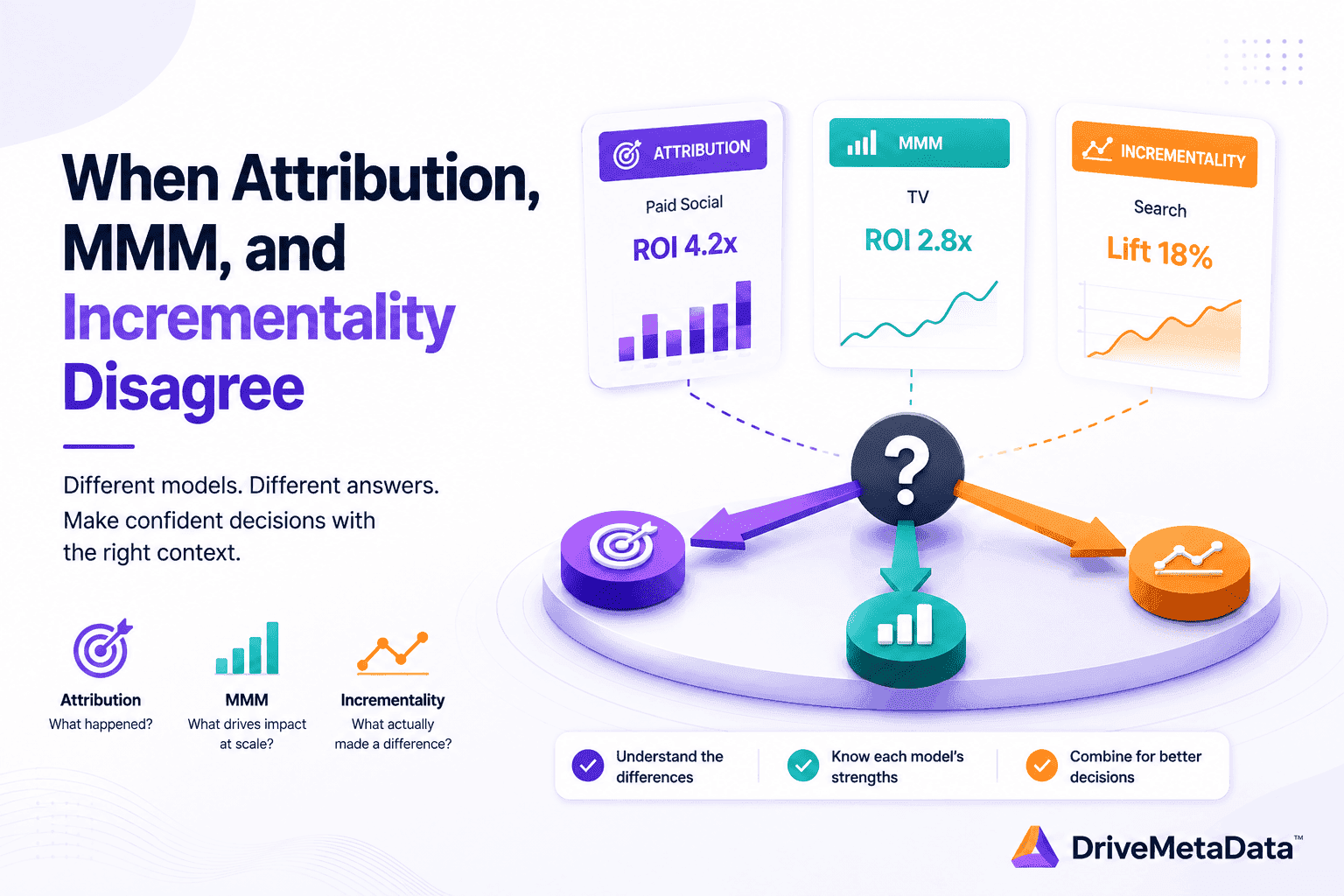
When Attribution, MMM, and Incrementality Disagree: A CFO-Ready Trust Framework
Marketing Attribution · 7 min read
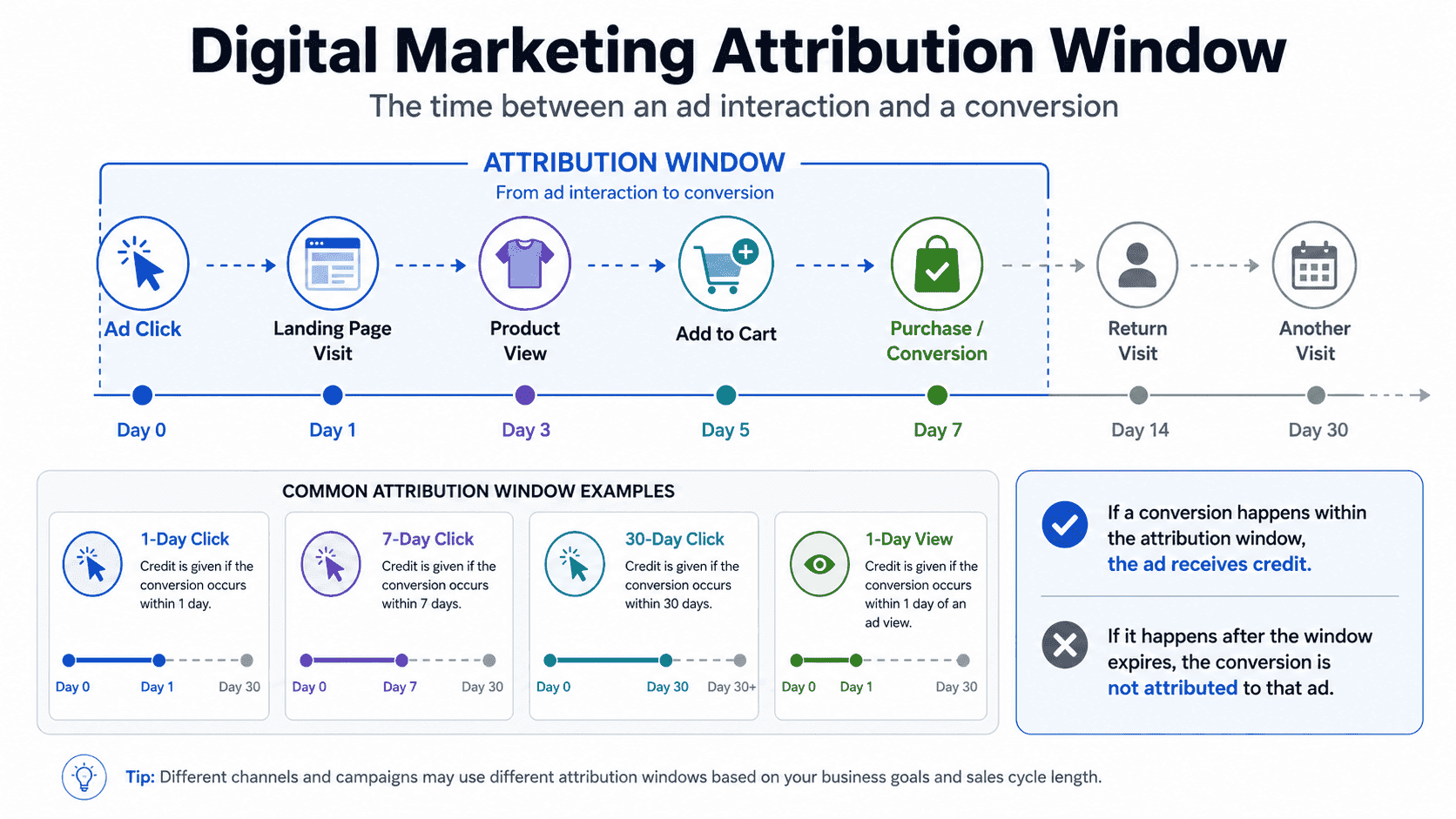
Understanding Attribution Windows: 1-Day, 7-Day, and 28-Day Explained
Marketing Attribution · 5 min read
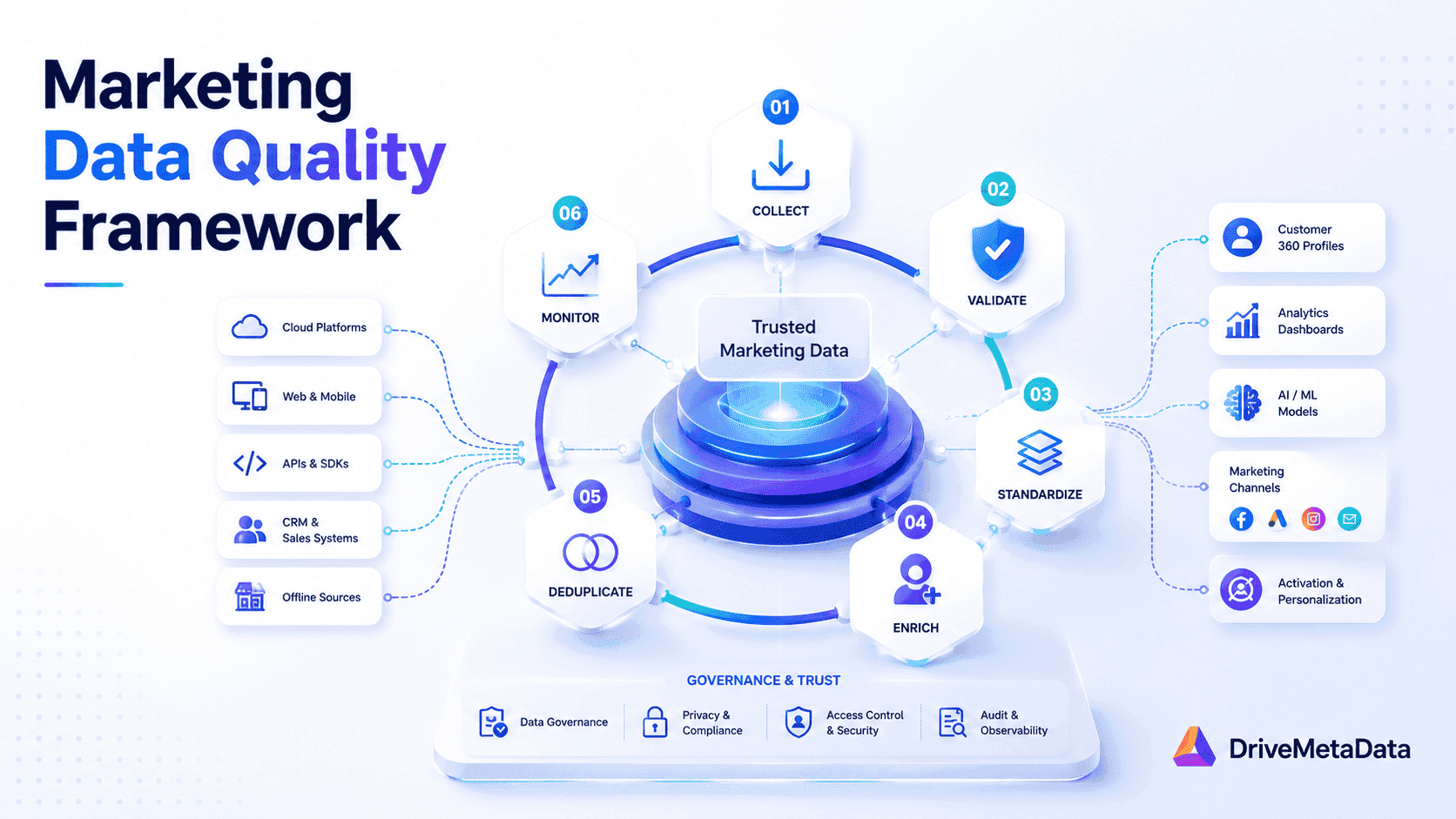
Marketing Data Quality Framework: Boost ROI & Attribution Accuracy
Marketing Attribution · 5 min read