
Ranjeet Ranjan
Why GA4, Meta Ads, and Shopify Revenue Numbers Don’t Match—and How to Fix It
Introduction: Understanding Revenue Mismatches in Ecommerce
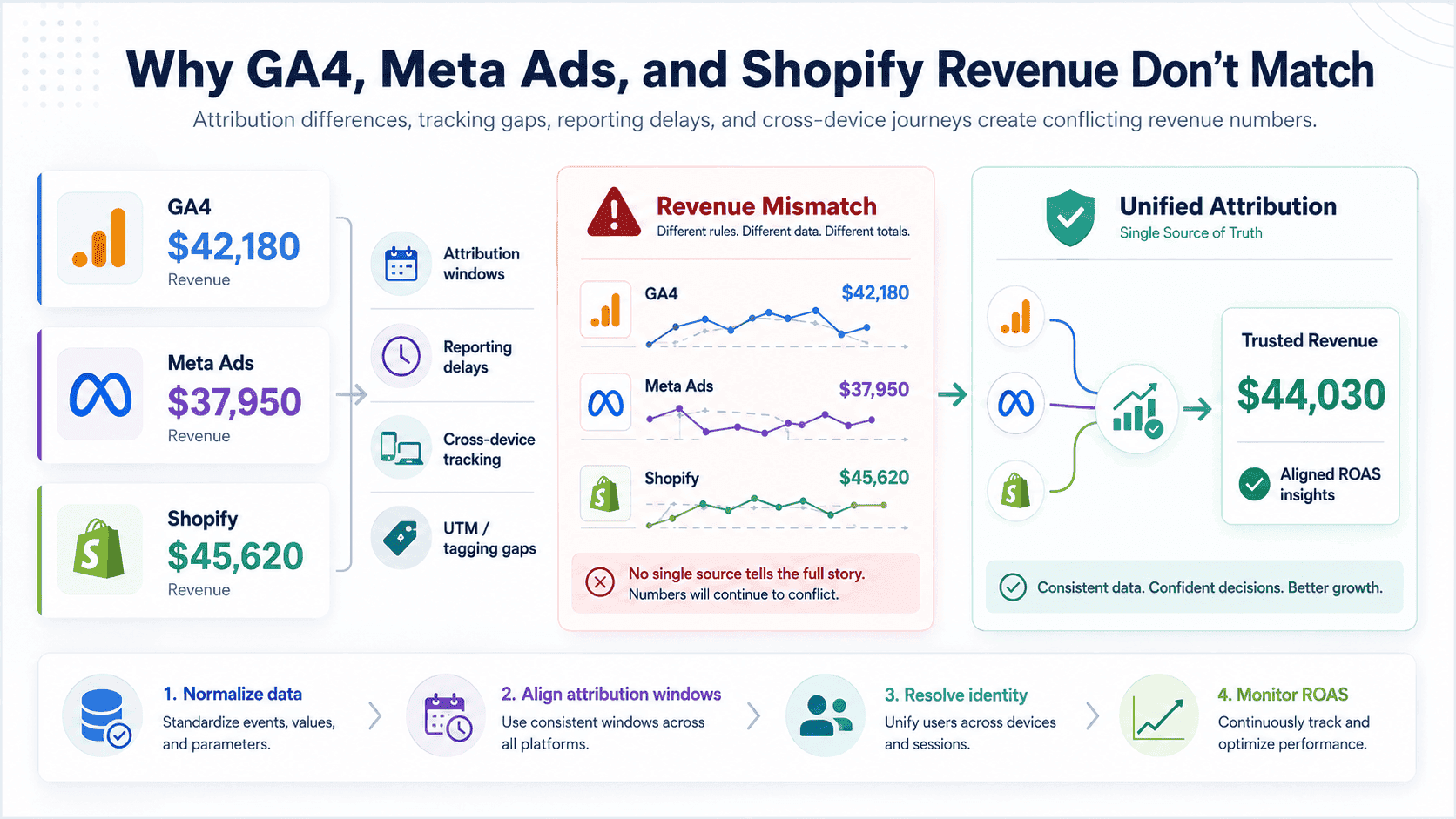
If you’ve noticed that revenue numbers from GA4, Meta Ads, and Shopify don’t align, you’re facing a common but critical ecommerce challenge. These discrepancies affect not only daily reporting but impact budgeting, campaign optimization, and growth strategies. When platforms show conflicting revenue, businesses risk inefficient marketing spend and missed opportunities.
This article explains why GA4 Meta Ads Shopify revenue mismatch happens, highlighting the technical and business causes. It also provides a practical framework to audit and fix these mismatches, helping marketers improve ROAS accuracy and marketing performance.
Common Causes of Revenue Discrepancies Across GA4, Meta Ads, and Shopify
Revenue mismatches result from differences in attribution, tracking, and data processing. Here are key factors ecommerce marketers face:
Differences in Attribution Models and Conversion Windows
Each platform attributes sales differently:
- GA4 Attribution: Uses data-driven or last-click models with conversion windows up to 30 days, crediting ad interactions even weeks before purchase. Learn more about different marketing attribution approaches and how they impact data.
- Meta Ads Attribution: Typically uses shorter windows, like 7-day click and 1-day view, often excluding later conversions.
- Shopify Reporting: Records transactions without assigning attribution, reflecting real-time sales.
These differences cause mismatches in timing and credit assignment. For example, Shopify registers a sale immediately, while GA4 might credit it days later, and Meta may miss it if outside its window.
Data Collection and Reporting Delays
Platforms have different data processing speeds and methods:
- GA4: Event-driven tracking can delay conversion reporting due to privacy settings or asynchronous processing.
- Meta Ads: Reporting may lag from batch updates or privacy-driven data restrictions.
- Shopify: Provides near real-time sales data but can vary with order updates or refunds.
These delays cause temporary revenue misalignment among platforms.
Cross-Device and Cross-Channel Tracking Challenges
Customers often interact through multiple devices and channels:
- A user may see a Meta ad on mobile but purchase later on a desktop.
- GA4 attempts cross-device tracking but faces cookie limitations and privacy restrictions.
- Meta's identity graph can miss offline or untracked touchpoints. Explore how identity resolution helps address these cross-device identity challenges.
This fragmentation can lead to fragmented attribution or duplicated revenue counts across platforms.
Fragmented Data Sources and Tracking Implementation Gaps
Disparate data sources and inconsistent tracking setups contribute to mismatches:
- Shopify captures transaction data but lacks detailed ad interaction context.
- GA4 and Meta require accurate tagging, pixel placement, and consistent UTM parameters.
- Missing or incorrect UTM codes, event tracking errors, or unsynced carts cause data gaps.
Without unified data frameworks, connecting revenue back to marketing efforts is difficult.
Why GA4 Meta Ads Shopify Revenue Mismatch Matters for Ecommerce Marketers
Accurate revenue data drives marketing decisions. Here’s why these mismatches are impactful:
Inaccurate ROAS Calculation and Poor Campaign Optimization
ROAS depends on matching revenue to ad spend precisely:
- Inconsistent attribution can make campaigns seem more or less effective.
- Budgets may be misallocated, reducing marketing efficiency.
- Delayed or incomplete data misguides optimizations.
Budgeting and Growth Strategy Uncertainty
Revenue mismatches add risk and hesitation:
- Lack of a clear data truth hinders marketing spend justification and ROI forecasting.
- Teams may avoid scaling channels seen as unreliable.
- Growth planning suffers from conservative budgets or risky assumptions.
Clear, aligned revenue data is essential for confident marketing investments.
How DriveMetaData Helps Address Revenue Mismatches with Unified Attribution
Solving revenue mismatches requires unified data solutions that harmonize multiple platforms.
Cross-Platform Revenue Reconciliation with the DriveMetaData Attribution Engine
DriveMetaData unifies revenue and ad spend data from GA4, Meta Ads, and Shopify into a single framework. By reconciling different attribution windows and models, it delivers consistent revenue insights and more accurate ROAS calculations. This is possible through its advanced marketing attribution capabilities.
This unified view reduces confusion and enables marketers to better assess channel performance.
Advanced Identity Resolution for Accurate Customer Journey Tracking
DriveMetaData connects cross-device, cross-channel user data through identity resolution technology. This consolidates fragmented profiles into complete customer journeys, improving attribution accuracy and targeting.
Unified Customer Data Platform for Reliable Marketing Analytics
By integrating and cleansing data from all sources, DriveMetaData creates a single source of truth via its Customer Data Platform. This eliminates manual reconciliation and offers clear insights into revenue flow, campaign impact, and customer behavior.
This foundation improves marketing confidence and protects investments.
Practical Steps to Audit and Fix Revenue Mismatches Using DriveMetaData
Here’s a simple framework to begin resolving revenue mismatches:
Step 1: Collect and Normalize Data from GA4, Meta Ads, and Shopify
- Export revenue and spend data from each platform.
- Standardize formats, time zones, and currencies.
- Align identifiers like order IDs and UTM tags where possible.
Step 2: Analyze and Align Attribution Windows
- Review each platform’s attribution settings.
- Normalize windows to minimize timing differences.
- Account for late conversions falling outside standard windows.
Step 3: Resolve Identity and Cross-Device Tracking Gaps
- Audit tagging, pixel installation, and tracking consistency.
- Use identity resolution methods to unify anonymous and known user data.
- Implement consistent tracking identifiers.
Step 4: Use DriveMetaData Attribution Engine for Consistent ROAS Insights
- Integrate collected data into a unified attribution platform.
- Apply multi-touch attribution models tailored to your business.
- Continuously monitor and refine tracking and reporting.
This approach helps marketers reconcile revenue data and improve measurement accuracy over time.
Case Study: How an Ecommerce Brand Improved ROAS Accuracy Using DriveMetaData
An emerging ecommerce brand struggled with conflicting revenue reports from GA4, Meta Ads, and Shopify, making campaign decisions difficult.
After adopting DriveMetaData:
- They unified revenue and ad spend data into one attribution model.
- Identity resolution connected fragmented customer journeys.
- Reporting delays reduced, providing near-real-time ROI visibility.
The outcome was a 15% improvement in ROAS accuracy and clearer marketing investment decisions.
Conclusion: Achieving Accurate Revenue Attribution for Ecommerce Growth
GA4 Meta Ads Shopify revenue mismatch is a common ecommerce hurdle but not insurmountable.
Understanding the causes like attribution differences, data delays, and tracking gaps enables effective diagnosis. Applying an audit framework and leveraging unified attribution with identity resolution can restore data clarity.
Aligned revenue data empowers confident budgeting, smarter campaign optimization, and sustainable growth.
Frequently Asked Questions
What are the main reasons GA4 revenue does not match Shopify revenue?
Differences in attribution windows, conversion tracking, reporting delays, and event setup inconsistencies cause GA4 and Shopify revenue to differ.
Why does Meta Ads revenue attribution differ from Shopify sales reporting?
Meta uses shorter attribution windows and privacy-constrained tracking that can under or over-credit conversions, compared to Shopify’s straightforward sales recording.
How can ecommerce businesses reconcile revenue data from GA4, Meta Ads, and Shopify?
By normalizing attribution models, auditing tagging and tracking, resolving cross-device identity gaps, and using unified attribution tools like the DriveMetaData Attribution Engine.
What tools or methods can improve ROAS accuracy for D2C brands?
Platforms that unify ad spend, customer data, and revenue—combined with identity resolution and multi-touch attribution—improve ROAS accuracy.
How does DriveMetaData unify revenue data to solve these mismatches?
DriveMetaData integrates GA4, Meta Ads, and Shopify data, harmonizes attribution windows, resolves customer identities, and produces consistent marketing ROI insights.
Attribution Audit
Find the gaps hiding in your attribution data.
Get a focused audit of campaign tracking, ROAS signals, and conversion paths before media spend leaks into blind spots.
Related Blogs
More from our insights
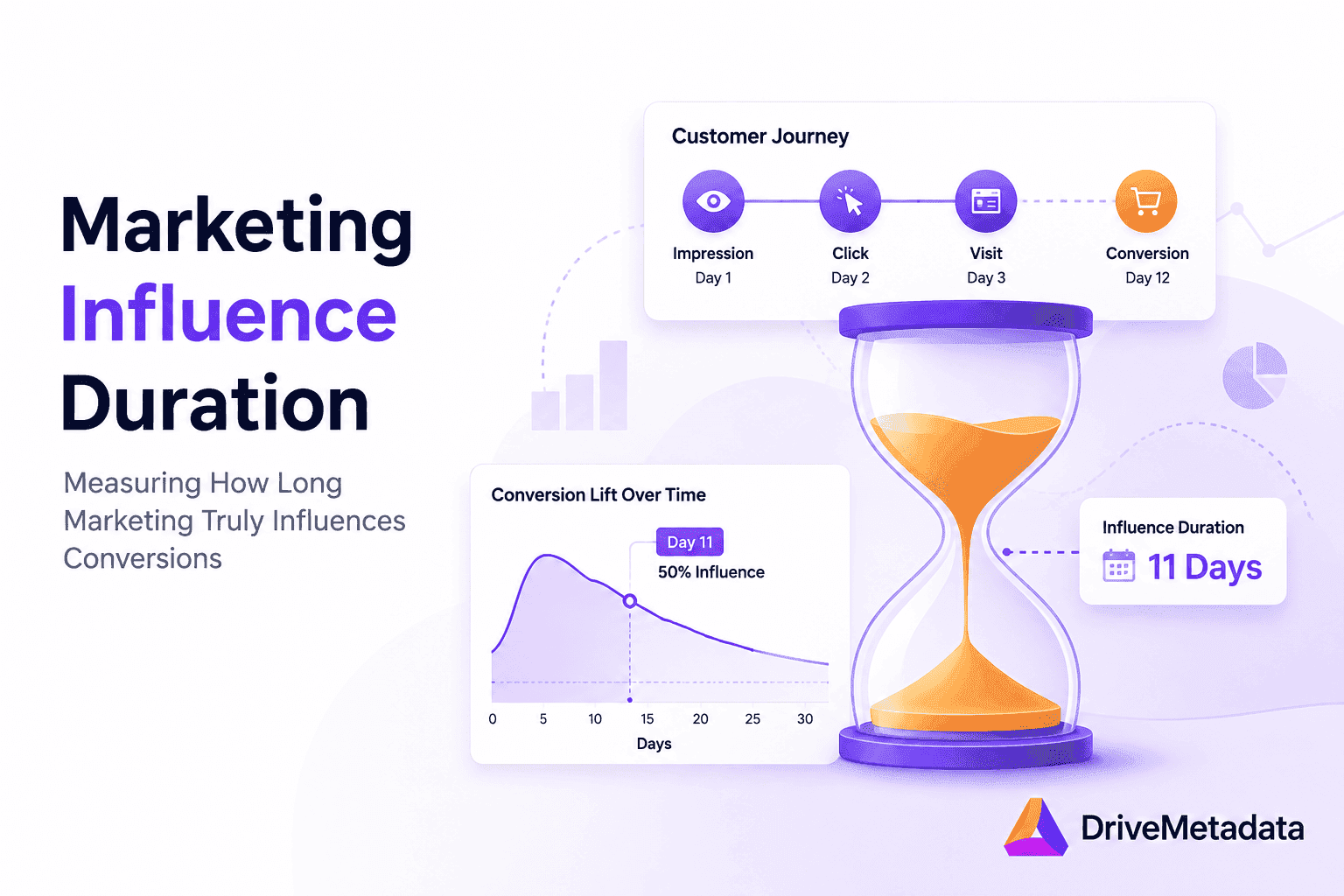
Marketing Influence Duration: Apply the Marketing Influence Half-Life™ for Smarter Attribution
Marketing Attribution · 6 min read
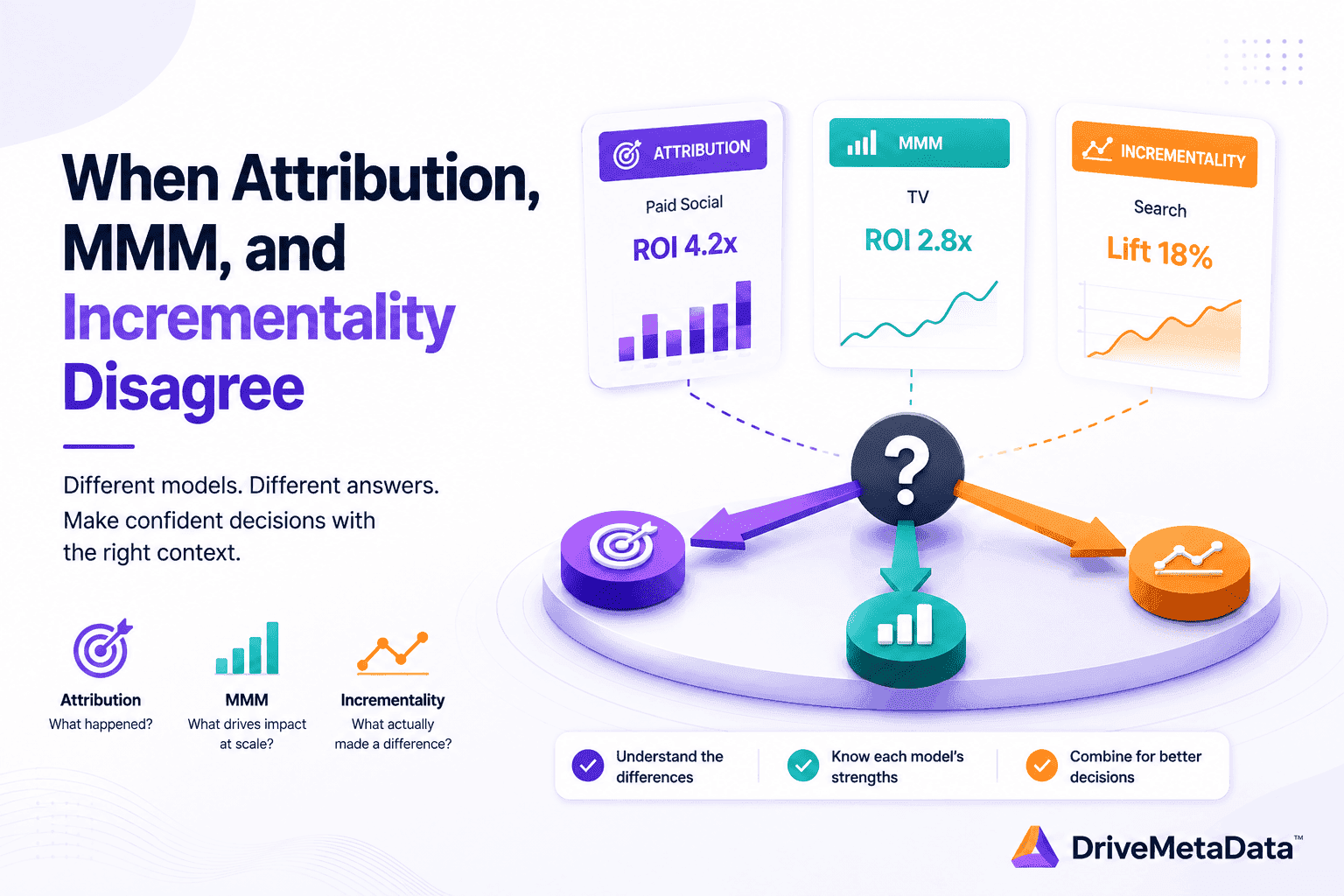
When Attribution, MMM, and Incrementality Disagree: Which Marketing Number Should You Trust?
Marketing Attribution · 5 min read
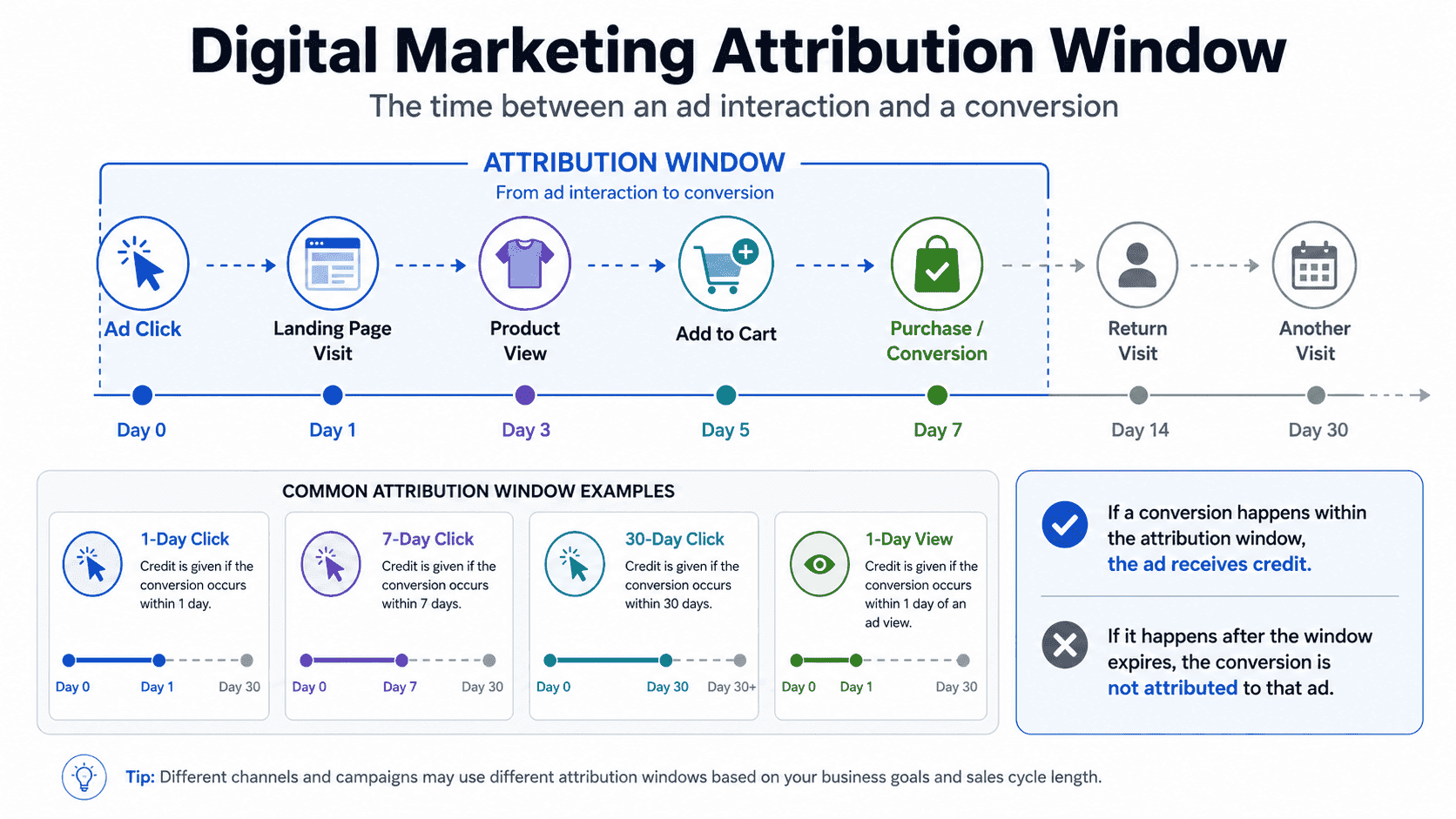
Understanding Attribution Windows: 1-Day, 7-Day, and 28-Day Explained
Marketing Attribution · 5 min read