
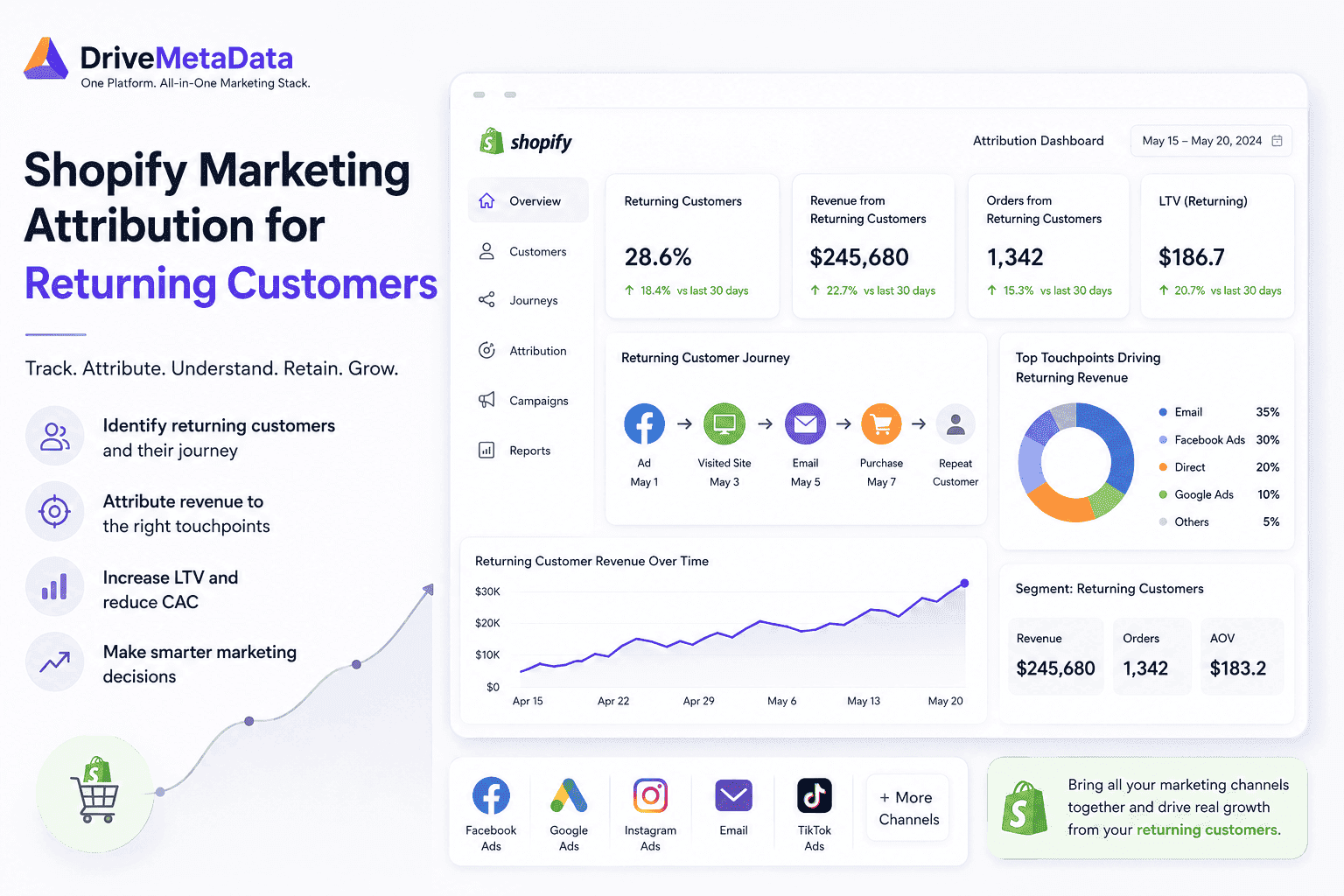
How to accurately credit multiple purchases by returning customers on Shopify with multi-touch attribution and AI.
Ranjeet Ranjan
AI Executive Brief
This article explains the challenges of attributing marketing credit for repeat purchases on Shopify and how multi-touch attribution, identity resolution, and AI-powered predictive analytics help optimize marketing spend and maximize customer lifetime value.
If you manage a Shopify store, you face a critical marketing challenge: accurately attributing credit when customers make multiple purchases over time. Relying on default attribution systems risks misallocating budgets and overlooking campaigns that drive higher lifetime value. This leads to overinvestment in acquisition channels and undervaluing retention efforts. This article outlines how to implement a multi-touch attribution approach that properly credits all purchases by returning customers, helping you optimize budget allocation and maximize long-term revenue.
The Challenge of Attributing Returning Customer Purchases on Shopify
Why Default Shopify Attribution Falls Short for Repeat Buyers
Shopify’s native attribution typically gives full credit to either the first purchase or the last click before the sale. While simple, this fails to capture the full customer journey, especially for repeat buyers whose decisions are influenced by multiple marketing interactions over time. Consequently, marketers see a distorted view of channel performance that undervalues retention-driven touchpoints supporting repeat purchases.
Business Risks of Misattributed Repeat Purchases
When repeat purchases are misattributed, marketers risk underfunding channels that nurture loyalty and overfunding acquisition tactics targeting only first-time buyers. This misalignment can reduce customer lifetime value and result in inefficient budget allocation, weakening long-term revenue growth and obscuring key drivers of sustained business success.
Impact on Budget Allocation and Customer Lifetime Value Optimization
Incomplete attribution of repeat purchases skews marketing budgets toward acquisition over retention and cross-sell campaigns. Without full visibility, marketing teams struggle to optimize spending based on comprehensive lifetime value metrics or to tailor initiatives for valuable returning customers. Accurate attribution informs better budget decisions and enhances understanding of evolving customer behavior.
Understanding Multi-Touch Attribution and Its Importance for Shopify Stores
What is Multi-Touch Attribution in E-commerce?
Multi-touch attribution assigns fractional marketing credit to all relevant customer interactions along the purchase path, rather than attributing sales solely to the first or last interaction. In e-commerce, this recognizes the combined influence of ads, emails, campaigns, and channels a customer encounters before buying, providing a more accurate reflection of complex, multi-session journeys—especially vital for returning customers.
How Multi-Touch Attribution Addresses Repeat Purchase Credit
Unlike single-touch models, multi-touch frameworks allocate credit to each purchase, including later ones, across all influencing touchpoints. This enables marketers to identify which channels drive repeat purchases and allocate budgets accordingly, supporting both acquisition and retention strategies.
Common Attribution Models and Their Limitations for Returning Customers
| Attribution Model | Description | Limitations for Repeat Purchases |
|---|---|---|
| Last Click | Credits 100% of the sale to the last interaction before purchase. | Ignores earlier touchpoints and undervalues channels that nurture retention. |
| First Click | Credits 100% to the initial touchpoint that started the journey. | Fails to credit subsequent marketing influencing repeat purchases. |
| Linear | Divides credit equally across all touches in a conversion path. | Simplistic; may not reflect the varying influence of different touchpoints. |
| Time Decay | Gives more credit to touches closer to the purchase time. | May undervalue early brand-building efforts important to repeat buyers. |
| Position Based | Allocates fixed credit to first and last touches, splits remainder evenly. | Does not differentiate influence across multiple purchases over time. |
Best Practices for Assigning Marketing Credit for Multiple Purchases from the Same Customer
Framework: Fractional Credit Allocation Across Customer Touchpoints
Implement a fractional attribution model that tracks every relevant touchpoint's contribution to each purchase a returning customer makes. For example, for customers with multiple purchases over months, credit should reflect all interactions influencing each sale. This approach depends on longitudinal tracking and smart weighting of touchpoints.
- Collect all customer touchpoints across sessions and channels linked to their identity.
- Map marketing interactions to specific purchases, not just first or last clicks.
- Assign fractional credit using a clear weighting rule—such as linear, position-based, or algorithmic models.
- Aggregate credit over multiple purchases to reveal true channel impact on lifetime value.
Linking Fragmented Customer Journeys to Improve Attribution Accuracy
Customer data is often fragmented across devices, channels, and sessions. Unifying customer identity through deterministic methods (like login info) or probabilistic matching allows stitching together these touchpoints for a complete view. Without this linkage, attribution gaps arise, resulting in missed credits or duplication.
Integrating Online and Offline Purchase Data for Complete Attribution
Many Shopify merchants operate omni-channel businesses that include offline sales like in-store or event purchases. Integrating offline transactions with online profiles ensures that repeat purchases outside digital channels receive proper marketing credit. Omitting offline data risks missing true marketing influence on these transactions.
- Collect offline transaction data and link it to online customer profiles.
- Synchronize offline and online purchase data in near real-time.
- Apply consistent attribution logic across online and offline data for unified reporting.
Enhancing Attribution for Returning Customers with AI and Predictive Analytics
The Role of AI in Forecasting Returning Customer Behavior
AI-powered analytics go beyond static attribution by forecasting individual customer behaviors based on historical data. Predictive models estimate repeat purchase probabilities, timing, and expected revenue, enabling marketers to anticipate customer actions and allocate resources proactively to nurture loyalty.
How Predictive Models Influence Marketing Spend for Long-Term Value
Integrating predictive analytics with attribution helps marketers prioritize budgets not just for immediate conversions but for campaigns that drive higher-value repeat purchases over time. This alignment balances acquisition and retention spending and focuses on maximizing customer lifetime value rather than short-term metrics.
Practical Decision Guide: Choosing the Right Attribution Approach for Your Shopify Store
Key Criteria to Evaluate Attribution Models and Tools
- Ability to track and unify returning customer journeys across multiple purchases and channels.
- Support for fractional multi-touch attribution instead of simplistic first/last click models.
- Integration capabilities with offline sales, CRM, web, mobile, and advertising platforms.
- Real-time or near real-time event tracking for timely attribution insights.
- Privacy-first data governance ensuring compliance and safeguarding customer trust.
- Availability of AI-powered predictive analytics to forecast repeat purchase potential.
Common Mistakes to Avoid in Attribution for Returning Customers
- Relying exclusively on Shopify’s default last-click attribution that ignores full customer journeys.
- Overlooking offline purchases in omni-channel sales environments.
- Failing to unify fragmented customer identities leading to undercounted repeat interactions.
- Using single-touch models that undervalue retention and long-term customer value.
- Ignoring privacy and compliance requirements during data integration and analysis.
- Not leveraging predictive analytics to inform marketing spend for future behavior.
How to Measure Success: Metrics that Reflect Accurate Repeat Purchase Attribution
Tracking the effectiveness of your attribution model means focusing on metrics beyond immediate sales:
- Customer Lifetime Value (CLV) by attributed marketing channel.
- Improvements in Repeat Purchase Rate linked to marketing efforts.
- Distribution of fractional credit across channels over multiple purchases.
- Reduction in customer churn connected to attribution-informed retention campaigns.
- Return on Ad Spend (ROAS) calculated using total revenue from repeat purchases.
How DriveMetaData Supports Accurate Attribution for Returning Shopify Customers
Unified Multi-Touch Attribution and Identity Resolution
DriveMetaData provides an AI-powered Customer Data Platform specifically designed to address the complexities of attributing returning customer purchases on Shopify. It combines advanced multi-touch attribution with robust identity resolution to assign precise fractional credit across all purchases, helping marketers understand true channel influence over entire customer journeys.
Real-Time Event Tracking and Omnichannel Data Integration
The platform integrates online and offline sales data via real-time event tracking and synchronizes information from web, mobile, advertising platforms, CRM, and physical channels. This eliminates attribution gaps common in omni-channel businesses, providing a complete and accurate credit assignment.
AI-Powered Predictive Models to Optimize Marketing Spend
DriveMetaData’s predictive AI models forecast returning customer behavior and long-term campaign impact. These insights aid marketers in optimizing budget allocation towards initiatives with the highest potential lifetime value, supporting data-driven decisions without overpromising guaranteed results.
FAQ
Why does Shopify’s default attribution underestimate repeat purchase credit?
Shopify’s default attribution typically credits only the first or last customer interaction, missing the full journey and subsequent purchases, which leads to undervaluing channels that influence repeat buying.
What makes multi-touch attribution more accurate for returning customers?
Multi-touch attribution assigns fractional credit to every significant marketing touchpoint across the entire customer journey, capturing the influence of all channels on each purchase, including repeats.
How can offline purchase data be integrated with Shopify online sales for attribution?
Offline sales data can be linked through shared customer identifiers and synchronized with online profiles to enable unified attribution models that recognize marketing’s impact on both online and offline purchases.
Can AI guarantee accurate forecasting of returning customer purchases?
AI predictive models provide insights based on historical data to guide investments, but they do not guarantee outcomes as customer behavior can be influenced by unpredictable factors.
What are common pitfalls to avoid when crediting repeat purchases on Shopify?
Avoid relying solely on first/last touch attribution, ignoring offline sales, neglecting identity unification, skipping privacy compliance, and failing to use predictive analytics for ongoing optimization.
Next Steps: Improving Your Shopify Attribution Strategy for Repeat Buyers
To unlock the full value of your Shopify marketing, start by auditing your current attribution methods and data completeness. Then, implement fractional multi-touch attribution models that capture multiple purchases. Ensure your system unifies customer identities and integrates offline data to close attribution gaps. Finally, leverage AI-powered predictive analytics to forecast returning customer behavior and optimize marketing investments for maximum lifetime value.
Attribution Audit
Find the gaps hiding in your attribution data.
Get a focused audit of campaign tracking, ROAS signals, and conversion paths before media spend leaks into blind spots.
Related Blogs
More from our insights
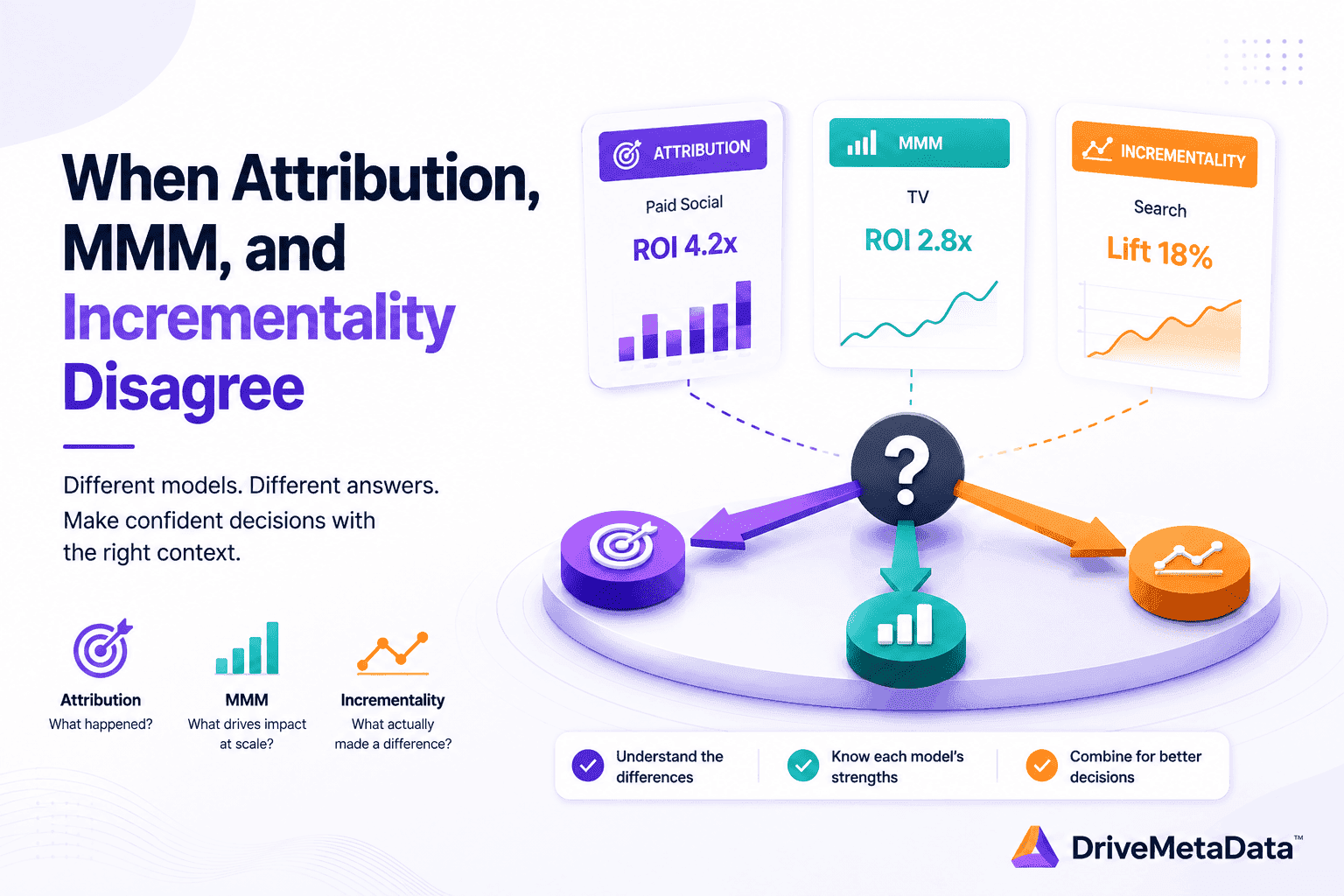
When Attribution, MMM, and Incrementality Disagree: A CFO-Ready Trust Framework
Marketing Attribution · 7 min read
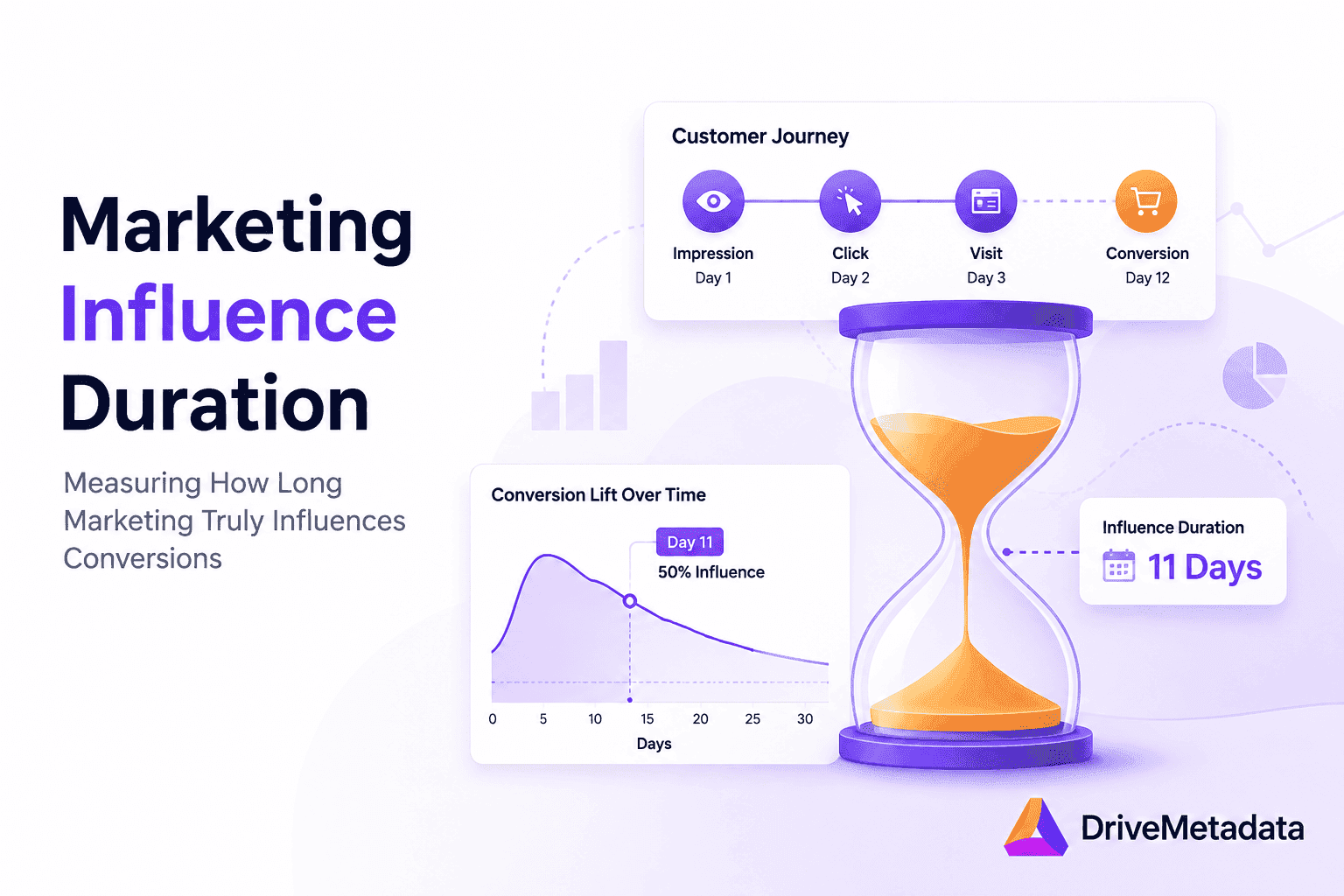
Marketing Influence Duration: Apply the Marketing Influence Half-Life™ for Smarter Attribution
Marketing Attribution · 5 min read
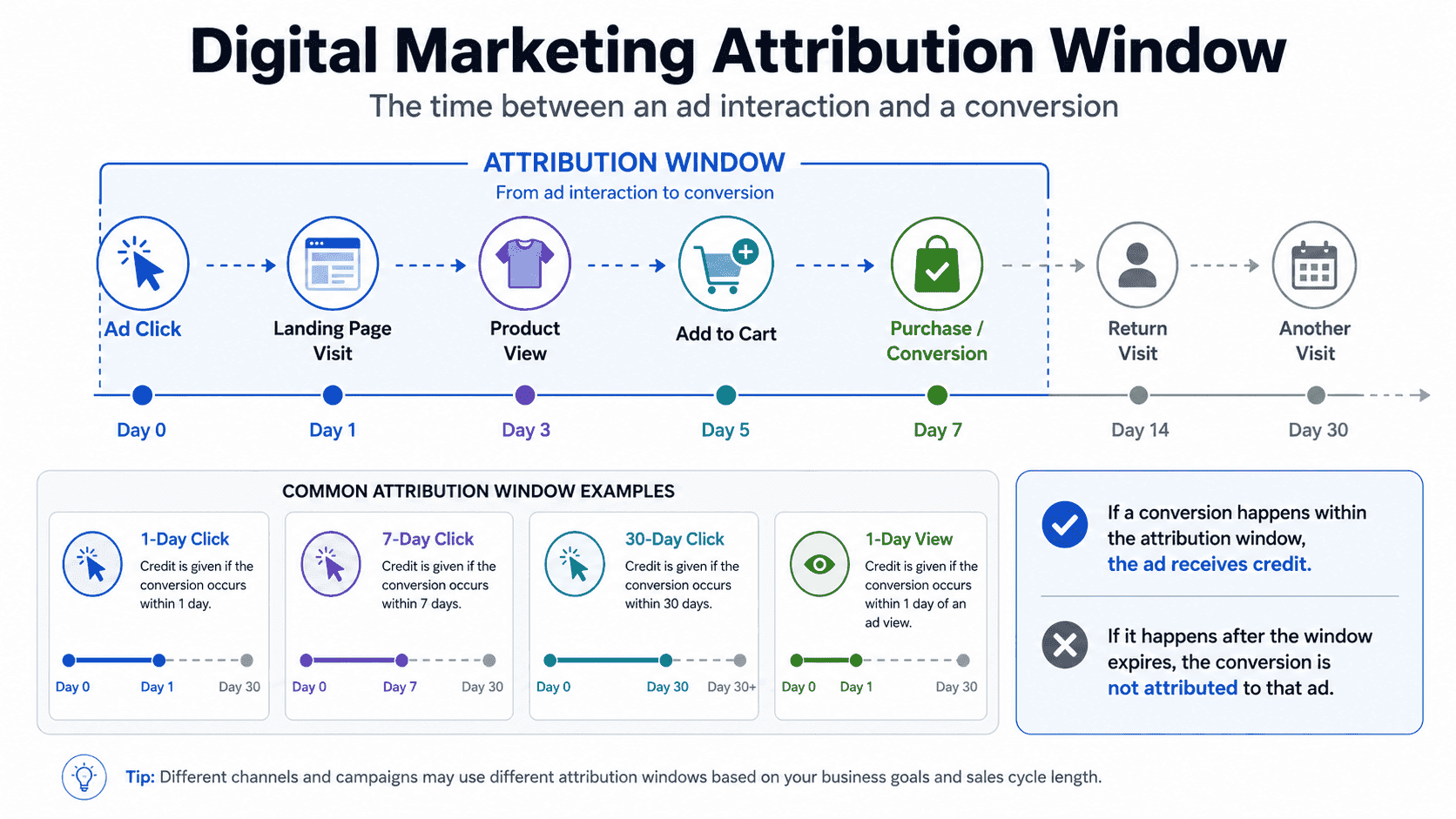
Understanding Attribution Windows: 1-Day, 7-Day, and 28-Day Explained
Marketing Attribution · 5 min read